

Why Cannabis Helps You Wind Down at Night
Cannabis helps you wind down by directly activating the brain’s endocannabinoid system (ECS), which regulates stress, mood, and sleep. The two main cannabinoids, THC and CBD, each influence this system differently. THC speeds sleep onset, while CBD reduces anxiety without psychoactive effects. Understanding why cannabis helps wind down means understanding how these compounds interact with your biology. This article breaks down the science, explains what the research actually shows, and gives you a practical evening cannabis relaxation checklist to build a routine that works for you.
Why does cannabis help wind down? The ECS explained
Cannabis reduces stress by activating CB1 receptors in the brain’s endocannabinoid system. These receptors sit in areas that control fear, memory, and stress response. When cannabinoids bind to them, they dampen overactive stress signals. The result is a calmer, less keyed-up feeling.

The ECS also connects to the HPA axis, which is your body’s main stress management circuit. When the HPA axis fires too hard, cortisol spikes and your mind races. ECS modulation of the HPA axis pulls that response back toward balance. That’s why winding down with cannabis isn’t just about “turning off” your brain. It’s about quieting an exaggerated stress response.
Your body already produces its own endocannabinoids, like anandamide, sometimes called the “bliss molecule.” Cannabis compounds mimic and amplify these natural signals. This is why the effect feels natural rather than forced.
Key ECS facts worth knowing:
- CB1 receptors are concentrated in the brain and central nervous system, directly affecting mood and stress.
- CB2 receptors are more common in immune tissue and play a supporting role in inflammation.
- Anandamide is your body’s built-in calming chemical. THC mimics its structure closely.
- The HPA axis connects the brain to the adrenal glands. ECS activity here reduces cortisol release.
Pro Tip: If you’re new to cannabis for relaxation, start with a low dose and give your ECS time to respond. Flooding the system too fast can produce the opposite effect.
How do THC and CBD affect sleep and relaxation differently?
THC and CBD are not interchangeable. They work through different pathways and produce different outcomes, especially for sleep.
| Effect | THC | CBD |
|---|---|---|
| Sleep onset | Speeds it up significantly | Mild indirect effect |
| REM sleep | Reduces duration and delays onset | Minimal direct impact |
| Anxiety | Can increase at high doses | Reduces at most doses |
| Psychoactive | Yes | No |
| Best use case | Falling asleep faster | Calming anxious thoughts |
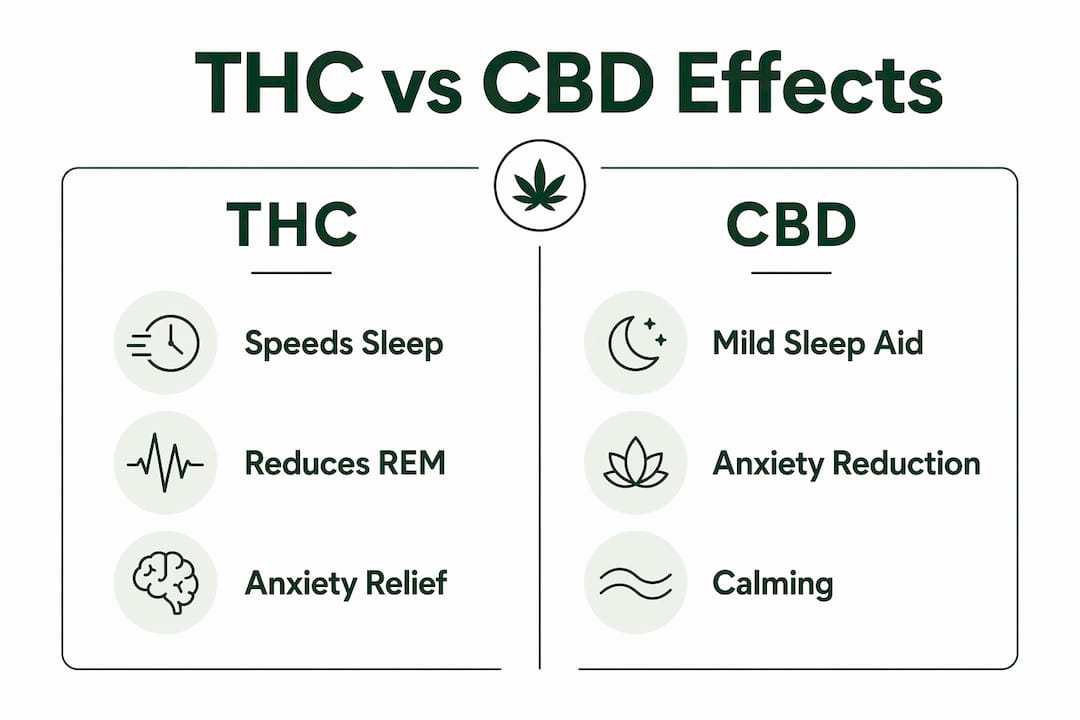
A 2026 pilot trial found that a 10mg THC / 200mg CBD combination reduced REM sleep by ~34 minutes and delayed REM onset by ~66 minutes, with no significant next-day alertness impairment. That’s a meaningful shift in sleep architecture. Less REM means fewer vivid dreams and, for some people, fewer nightmares.
CBD’s role is different. A 2026 longitudinal study with 345 adults showed anxiety decreased by 39.5% in the THC+CBD group and 34.8% in the CBD-only group, compared to just 7.8% in the THC-only group. That gap is significant. It tells us that CBD is doing real work on anxiety, and that THC alone is not the most effective path to relaxation.
The takeaway: if your goal is to quiet anxious thoughts before bed, a product with both THC and CBD will outperform a THC-only option. If your goal is to fall asleep faster, THC plays a bigger role. Most people benefit from both.
Pro Tip: Look for products with a clear THC:CBD ratio on the label. A 1:10 THC to CBD ratio is a good starting point for anxiety-focused wind-down. A 1:1 ratio works well for sleep onset.
What practical things should you know before using cannabis to unwind?
Cannabis is not a one-size-fits-all solution. Several factors shape whether it helps or hurts your wind-down routine.
-
Dose matters more than you think. THC follows a biphasic dose-response curve. A low dose is sedating. A high dose can be stimulating or anxiety-inducing. Two people using the same product can have opposite reactions. Start low and adjust slowly.
-
Timing changes everything. Inhaled cannabis (flower, vapes) acts within minutes and peaks quickly. Edibles and gummies take 45–90 minutes to kick in and last much longer. Timing your consumption correctly prevents next-day grogginess. If you’re using edibles, take them 90 minutes before you want to sleep.
-
REM suppression is real. THC reduces REM sleep. For most people this is fine short-term, but long-term REM suppression can affect memory consolidation and emotional processing. Cycling off periodically helps your sleep architecture recover.
-
Withdrawal disrupts sleep. A 2026 meta-analysis found that cannabis withdrawal reliably causes reduced sleep time and longer sleep onset latency. If you use cannabis nightly and then stop, expect a rough week of sleep. This is not dangerous, but it is uncomfortable.
-
Build non-cannabis wind-down cues. Relying solely on cannabis to signal sleep trains your brain to need it. Pair cannabis use with consistent habits like dimming lights, a set bedtime, or a short breathing routine. These cues work independently and protect you if you take a break.
-
Track your effect window. Note when you consume, when you feel the peak effect, and how you feel the next morning. Monitoring this onset-to-next-day window is the fastest way to find your personal sweet spot.
How to build an evening cannabis wind-down routine
A cannabis wind-down routine, also called a late-night unwind routine, works best when it combines the right product, the right dose, and the right environment. Here’s what that looks like in practice.
Choosing the right product type
Different formats suit different goals:
- Flower (indica strains): Fast-acting, controllable dose. A light indica strain is a classic choice for evening relaxation. Effects arrive in minutes and fade within 1–2 hours.
- Gummies and edibles: Longer duration, easier to dose consistently. Products like Wyld Gummies or Kanha CBG/THC Delta 9 Gummies combine cannabinoids for broader relaxation effects.
- Cannabis seltzers: Fast-absorbing and easy to sip slowly. Great for people who want a gradual, controlled onset.
- CBD-focused products: Green Roads offers CBD-forward options that reduce anxiety without strong psychoactive effects.
Your evening cannabis relaxation checklist ✅
Use this as your starting framework and adjust based on your response:
- 90 minutes before bed: Take your edible or gummy if that’s your format.
- 30 minutes before bed: Inhale flower or use a vape if you prefer faster onset.
- Dim your environment: Lower lights and reduce screen brightness to support melatonin production.
- Set a consistent bedtime: Cannabis works better when paired with a regular sleep schedule.
- Keep a sleep log: Note product, dose, timing, and how you feel the next morning.
- One night per week, skip cannabis: This preserves your sensitivity and prevents tolerance buildup.
Why CBD-inclusive products work better for relaxation
Cannabinoid composition matters more than most people realize. Many people credit “cannabis” for their relaxation without knowing that the THC:CBD ratio is doing the heavy lifting. Products that include CBD alongside THC consistently outperform THC-only options for anxiety reduction. If you’re browsing the mood collection at Tghhouston, look for products that list both cannabinoids clearly.
You can also pair cannabis with other relaxation tools. A THC+CBD bath bomb from Kush Queen adds a topical, sensory layer to your wind-down. THC sleep gummies with CBN from Kush Queen add a third cannabinoid that research links to deeper rest.
Key Takeaways
Cannabis helps you wind down by activating CB1 receptors in the endocannabinoid system, reducing stress signals, and promoting sleep onset, with CBD-inclusive products delivering the strongest anxiety relief.
| Point | Details |
|---|---|
| ECS activation drives relaxation | CB1 receptors dampen stress signals when cannabinoids bind to them. |
| THC and CBD serve different roles | THC speeds sleep onset; CBD reduces anxiety more effectively than THC alone. |
| Dose is biphasic | Low THC doses sedate; high doses can stimulate or cause anxiety. |
| Timing shapes the experience | Edibles need 90 minutes lead time; inhaled forms act within minutes. |
| Build non-cannabis habits too | Pairing cannabis with consistent sleep cues prevents withdrawal-related disruption. |
What I’ve learned from watching people build cannabis wind-down routines
People come to cannabis for relaxation expecting a simple fix. What I’ve seen is that the ones who get consistent results treat it like a tool with settings, not a switch. They pay attention to dose, format, and timing. The ones who struggle usually picked a product based on THC percentage alone and ignored the CBD content entirely.
The research backs this up. The anxiety reduction gap between THC+CBD and THC-only products is not small. It’s a 39.5% versus 7.8% difference. That’s not a rounding error. That’s a fundamentally different experience. And yet most people shopping for relaxation products never look at the CBD content.
The other thing I’d push back on is the idea that cannabis is a long-term sleep solution on its own. The withdrawal data is clear. If you use it nightly and stop, your sleep gets worse before it gets better. That’s not a reason to avoid it. It’s a reason to build the rest of your routine around real sleep hygiene habits, not just cannabis. Use it as one layer, not the whole structure.
Honestly, the most effective wind-down routines I’ve seen combine a CBD-inclusive product, a consistent bedtime, and at least one non-cannabis cue like a breathing exercise or a dim-light ritual. Cannabis amplifies a good routine. It can’t replace one.
— Ethan
Wind down tonight with Tghhouston
Tghhouston carries a rotating selection of lab-tested THCA products built for every kind of wind-down routine. Whether you prefer sipping something cold, chewing a gummy, or lighting up an indica before bed, we’ve got a format that fits. Grab a THCA Seltzer single can for a smooth, gradual onset, or stock up with a THCA Seltzer 4-pack to keep your evenings covered all week. Prefer gummies? Wyld Gummies 10ct are a customer favorite for relaxation. Both Houston locations are open 24/7, and we offer free delivery on orders over $100.
FAQ
Why does cannabis make you feel relaxed?
Cannabis activates CB1 receptors in the brain’s endocannabinoid system, which reduces overactive stress signals and lowers cortisol output. This produces a calmer mental state within minutes to an hour depending on the format used.
Does CBD or THC work better for winding down?
A combination of both works best. A 2026 longitudinal study found that THC+CBD reduced anxiety by 39.5% compared to just 7.8% for THC alone, making CBD-inclusive products the stronger choice for relaxation.
How long before bed should I take cannabis?
Inhaled cannabis acts within 5–15 minutes, so 30 minutes before bed is sufficient. Edibles and gummies take 45–90 minutes, so plan to take them at least 90 minutes before your target sleep time.
Can cannabis disrupt sleep over time?
Yes. Regular nightly use followed by stopping causes withdrawal-related sleep disruption, including shorter sleep time and longer time to fall asleep. Building non-cannabis sleep habits alongside your routine reduces this risk.
What is a cannabis wind-down routine?
A cannabis wind-down routine is a structured evening practice that combines a specific cannabis product, dose, and timing with consistent sleep cues like dimming lights or a set bedtime to signal the body that rest is coming.
Recommended
Before You Go…
Here are a few handpicked articles to inspire your next self-care moment.


