

Cannabis Terp Sauce: What It Is and How to Use It
Cannabis terp sauce is defined as a high-terpene full-spectrum extract (HTFSE) that combines a terpene-rich liquid with THCA crystalline structures to deliver both intense flavor and potent effects. If you’ve been curious about what is cannabis terp sauce and why enthusiasts rave about it, the answer comes down to chemistry. The liquid fraction of terp sauce typically carries 13–40% terpenes and around 50% THCA, while the crystalline portion can exceed 90% THCA. That combination makes terp sauce one of the most flavorful and full-spectrum concentrates available today. Connoisseurs reach for it not just for potency, but for the strain-specific aroma and taste that other concentrates simply can’t match.
What is cannabis terp sauce and what’s it made of?
Terp sauce is classified as a high-terpene full-spectrum extract, or HTFSE. That label tells you two things: the terpene content is unusually high, and the extract preserves the full range of cannabinoids and terpenes from the original plant. Most concentrates strip terpenes away during processing. Terp sauce does the opposite.
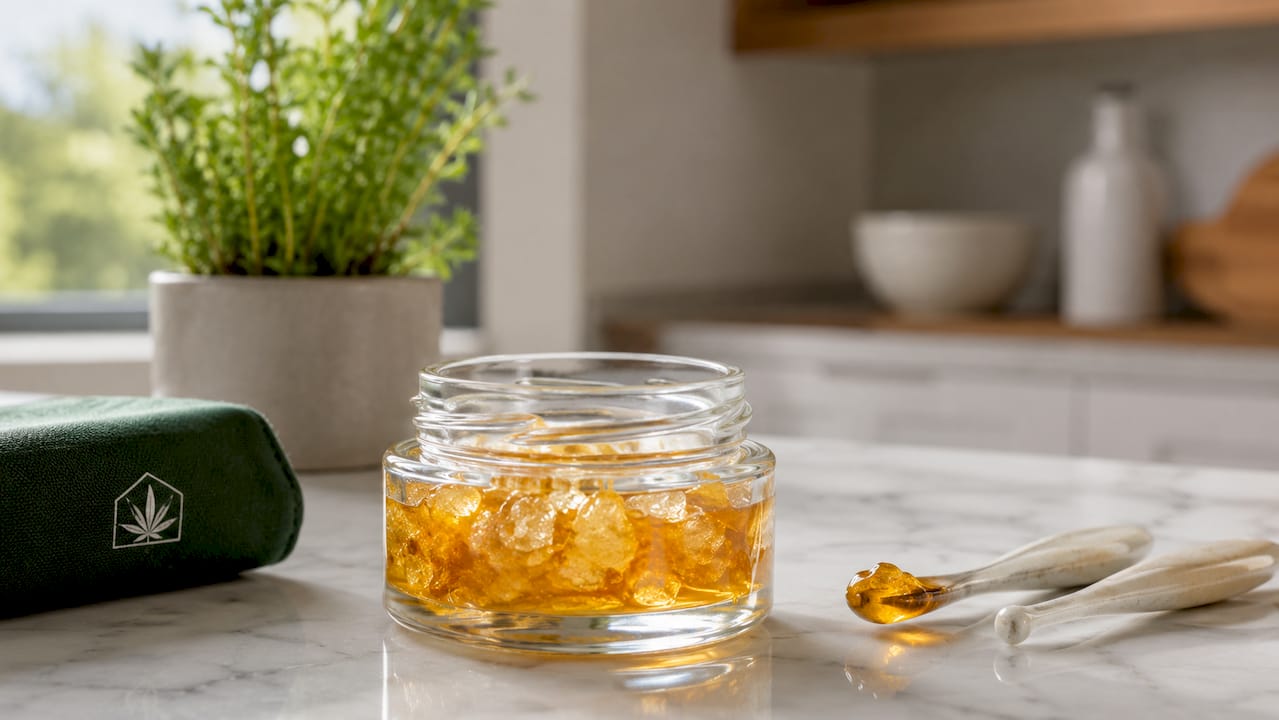
The product has two distinct components. The liquid portion is the “sauce” itself, a golden, viscous fluid loaded with terpenes that give each strain its signature scent and flavor. The solid portion consists of THCA diamonds, crystalline structures that deliver concentrated potency. Together, they create what many enthusiasts call the most complete cannabis experience available in concentrate form.
| Component | Content | Role |
|---|---|---|
| Terpene-rich liquid (sauce) | 13–40% terpenes, ~50% THCA | Flavor, aroma, and entourage effect |
| THCA diamonds (crystalline) | Can exceed 90% THCA | Potency and cannabinoid delivery |
| Minor cannabinoids | Varies by strain | Full-spectrum profile support |
The cannabis terpene profile in terp sauce directly shapes the subjective experience. Myrcene, limonene, caryophyllene, and linalool are among the most common terpenes found in sauce, and each one contributes a distinct flavor note and physiological effect. A sauce heavy in limonene will taste bright and citrusy. One dominant in myrcene will feel earthy and relaxing.
The entourage effect describes the synergy between terpenes and cannabinoids that produces a more nuanced experience than THC alone. Terp sauce is one of the best concentrates for experiencing this effect because it preserves both components in high concentrations. That’s why enthusiasts who understand cannabis chemistry consistently choose sauce over simpler extracts.
Pro Tip: When reading a terp sauce product label, look for the terpene percentage alongside the THCA percentage. A product listing only THC numbers is likely not a true HTFSE.
How is terp sauce made?
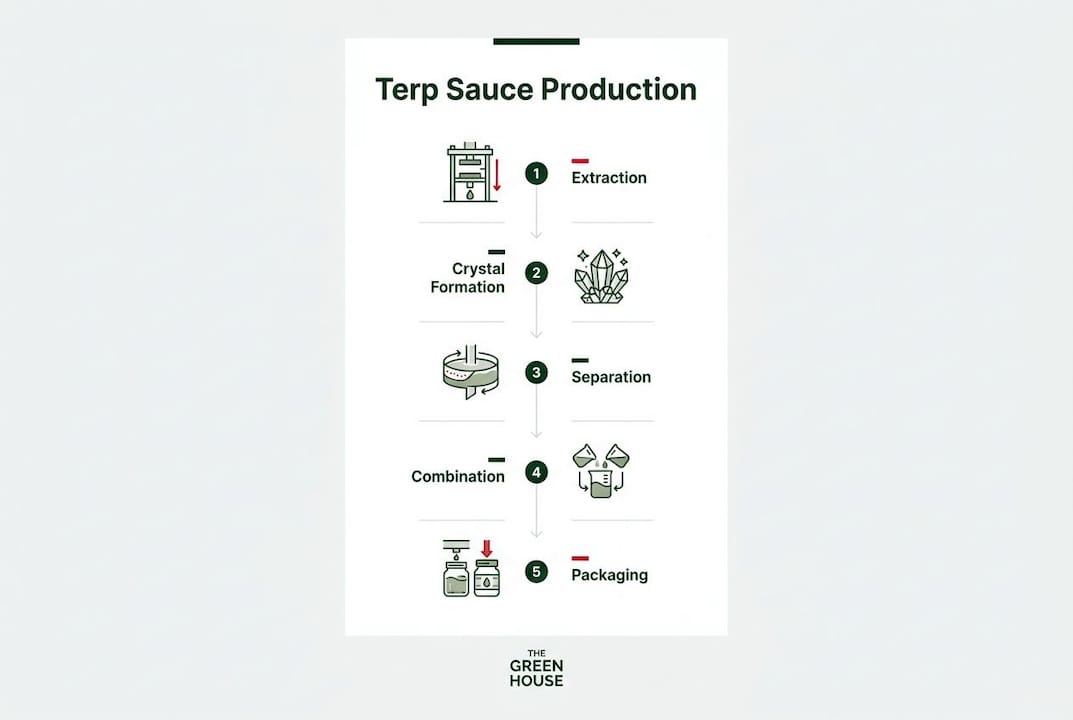
The production of terp sauce is one of the most technically demanding processes in cannabis extraction. It requires specialized equipment, precise temperature control, and weeks of patience. Here’s how it works from start to finish.
-
Fresh or frozen cannabis is selected. Producers typically use fresh-frozen flower to preserve the volatile terpenes that would otherwise evaporate during drying and curing. This is the same starting material used for live resin.
-
Closed-loop hydrocarbon extraction runs at subzero temperatures. The extraction uses butane or propane as a solvent in a sealed, pressurized system. Temperatures drop to between –60°C and –20°C to capture terpenes without degrading them. This cold environment is what separates terp sauce production from standard BHO extraction.
-
The crude extract is collected and sealed for curing. The raw extract goes into a sealed vessel and sits in a controlled, dark environment for 2–4 weeks. During this time, THCA naturally crystallizes and sinks to the bottom while the terpene-rich liquid rises to the top. This separation happens without mechanical intervention in authentic HTFSE production.
-
The two fractions are separated or recombined. Some producers keep the diamonds and sauce together. Others separate them and recombine specific ratios to hit a target profile. True HTFSE products involve natural crystallization rather than artificial re-blending, and purists prefer the single-source approach.
-
Residual solvent is purged. The final product goes through a low-temperature purge to remove any remaining solvent before packaging. Licensed facilities use testing protocols to confirm solvent levels fall within safe limits.
The difference between terp sauce and live resin comes down to this curing step. Live resin is extracted and processed quickly without the extended crystallization phase. Terp sauce takes weeks longer, which is why it commands a higher price and delivers a more complex profile. For a deeper look at natural cannabis extraction, the process behind terp sauce is a great reference point.
Pro Tip: Never attempt to make terp sauce at home. The solvents involved are highly flammable, and DIY extraction has caused serious injuries. Always buy from a licensed facility that provides lab results.
What are the benefits and uses of cannabis terp sauce?
Terp sauce delivers benefits that go well beyond raw potency. Here’s what makes it stand out from other concentrates.
-
Unmatched flavor and aroma. High terpene content up to 60% means terp sauce captures the full aromatic fingerprint of the source strain. You taste the plant, not just the extract. That’s a meaningful difference for anyone who cares about the sensory side of cannabis.
-
Full-spectrum therapeutic potential. The entourage effect amplifies the therapeutic value of terp sauce. Terpenes like linalool have documented calming properties, while caryophyllene interacts directly with CB2 receptors. The combination of terpenes and THCA cannabinoid content produces effects that feel more complete than isolated THC.
-
Strain-specific experience. Because terp sauce preserves the original plant’s terpene profile, each product delivers a distinct, strain-specific effect. A Gelato sauce feels different from a Sour Diesel sauce, even at similar THCA percentages. That specificity is what drives enthusiasts to seek out terp sauce over generic concentrates.
-
Versatile consumption methods. Terp sauce works best with dabbing on a quartz banger or an electronic nail set to a low temperature (around 315°F to 450°F). It also works in specialized vaporizers designed for liquid concentrates. High-heat methods destroy terpenes, so low-temperature dabbing is the standard approach for preserving the full profile.
-
Ideal for experienced users. The combination of high THCA and high terpene content makes terp sauce potent. It suits users who already understand their tolerance and want a more refined, full-spectrum experience rather than simply chasing the highest THC number.
How to store and consume terp sauce safely
Terpenes are volatile compounds. They degrade faster than the cannabinoids in more stable concentrates like shatter or wax. Proper storage in a cool, dark, airtight container is the single most important step you can take to protect your terp sauce investment.
A small glass jar with a silicone-lined lid stored in a refrigerator or cool drawer works well for short-term storage up to a few weeks. For longer storage, a freezer-safe container prevents terpene evaporation. Avoid leaving terp sauce in a warm car, near a window, or in any environment where temperature fluctuates. Heat and light are the two fastest ways to flatten the flavor.
Dosing deserves attention, especially for newer concentrate users. Terp sauce is potent. A rice-grain-sized amount is a reasonable starting point. The THCA content converts to THC when heated, and the effects arrive quickly when dabbing. Start low, wait a few minutes, and adjust from there.
Reading a Certificate of Analysis (COA) before buying any terp sauce is non-negotiable. A COA from a licensed third-party lab confirms terpene percentages, THCA content, and residual solvent levels. The Greenhouse Dispensary provides lab-tested product transparency so you know exactly what you’re consuming. Products without a COA are a red flag, full stop.
Pro Tip: “Full spectrum” is not a regulated term. Some products add isolated or synthetic terpenes rather than preserving natural ones. Always check the COA for terpene source disclosure before purchasing.
Key Takeaways
Terp sauce is the most terpene-rich cannabis concentrate available, delivering strain-specific flavor, full-spectrum effects, and potency through a combination of THCA diamonds and a terpene-rich liquid fraction.
| Point | Details |
|---|---|
| Chemical composition | Terp sauce combines 13–40% terpenes in liquid form with THCA crystals that can exceed 90% purity. |
| Production complexity | Closed-loop extraction at subzero temperatures plus 2–4 weeks of curing creates the diamond-and-sauce structure. |
| Entourage effect | Terpene-cannabinoid synergy produces a more nuanced experience than high-THC concentrates alone. |
| Storage requirements | Cool, dark, airtight storage is critical because terpenes degrade faster than in stable concentrates like shatter. |
| Safety and verification | Always buy from licensed facilities and verify product quality through a third-party Certificate of Analysis. |
Why terpenes matter more than the THC number
Honestly, the cannabis industry spent years training consumers to chase THC percentages. I get why that happened. THC is easy to measure, easy to market, and easy to compare. But it’s a poor proxy for the actual experience you’re going to have.
What I’ve seen shift in the last few years is a growing group of enthusiasts who understand that the terpene profile governs the feel of the high more than the THC number does. Two products at 80% THCA can feel completely different depending on whether one is terpene-rich and the other is stripped down. Terp sauce makes that difference impossible to ignore because the terpenes are right there in the product, visible and measurable.
The pitfall I see most often is consumers buying “diamonds and sauce” products without checking whether the sauce is authentic or artificially re-blended with added terpenes. Some producers separate the fractions and recombine them in ratios that don’t reflect the original plant. That’s not necessarily dangerous, but it’s not the same product as a true single-source HTFSE. The COA is your best tool for telling the difference. If a brand won’t show you the lab results, that tells you something.
My honest advice: treat terpene percentage as seriously as you treat THCA percentage. A terp sauce with a rich, verified terpene profile from a licensed facility will consistently outperform a high-THCA product with no terpene data. That’s where the real quality lives in 2026.
— Ethan
What The Greenhouse Dispensary offers for concentrate enthusiasts
If terp sauce has you curious about the broader world of cannabis concentrates, The Greenhouse Dispensary is a solid place to start. Both Houston locations, EaDo on Polk Street and Spring Branch on Long Point Road, are open 24/7 and carry lab-tested products with full COA transparency.

The Greenhouse Dispensary’s dabs and concentrate collection includes options across the concentrate spectrum, from entry-level to connoisseur-grade products. Every product on the menu is tested and rotated regularly for freshness. Free delivery is available on orders over $100, and the online store makes it easy to browse before you visit. Whether you’re new to concentrates or already know exactly what terpene profile you’re after, the team at The Greenhouse Dispensary is ready to help you find the right fit.
FAQ
What is terp sauce in simple terms?
Terp sauce is a cannabis concentrate with a high terpene content and THCA crystals. It delivers intense flavor, strain-specific aroma, and potent effects in a single product.
How does terp sauce differ from regular cannabis oil?
Regular cannabis oil is typically a distillate with most terpenes removed, leaving a neutral-flavored, high-THC product. Terp sauce preserves the full terpene profile alongside THCA crystals, producing a more complex and flavorful experience.
Is terp sauce safe to use?
Terp sauce is safe when purchased from a licensed facility that provides third-party lab results. DIY production is dangerous due to flammable solvents and should never be attempted at home.
What’s the best way to consume terp sauce?
Low-temperature dabbing on a quartz banger or an electronic nail set between 315°F and 450°F preserves the terpene profile best. High heat destroys terpenes and reduces the flavor and entourage effect.
How long does terp sauce stay fresh?
Terpenes degrade quickly without proper storage. Kept in a cool, dark, airtight container, terp sauce maintains quality for several weeks. Freezer storage extends that window significantly.
Recommended
Before You Go…
Here are a few handpicked articles to inspire your next self-care moment.


