

Avoiding Heavy Metals in Cannabis Vapes: 2026 Guide
Heavy metals in cannabis vapes are defined as toxic inorganic elements, primarily lead, arsenic, cadmium, and mercury, that enter vape products through contaminated plant material, extraction processes, or low-quality hardware. Avoiding heavy metals in cannabis vapes is the most direct way to protect your lungs, since inhalable limits are up to 10 times stricter than oral limits due to how efficiently lung tissue absorbs these compounds. The good news? You have real control over your exposure. Buying from licensed dispensaries, checking Certificates of Analysis (COAs), and choosing hardware with ceramic or glass heating elements are the three moves that matter most. This guide breaks down where contamination comes from, how to read lab results, and what daily habits keep your sessions clean.
What are the common sources of heavy metal contamination in cannabis vapes?
Heavy metal contamination enters cannabis vapes through three distinct pathways: the plant itself, the extraction process, and the hardware. Understanding each one helps you spot risk before it reaches your lungs.
Plant material and soil
Cannabis is a hyperaccumulator of heavy metals. That means the plant actively pulls lead, cadmium, and arsenic from soil, water, and fertilizers into its tissue. Crops grown in contaminated soil or irrigated with untreated water carry those metals right into the harvest. This is why source material purity is the foundation of any safe vape product.
Extraction and concentration
Extraction amplifies metal concentration in the finished oil. When processors pull cannabinoids from plant tissue, dissolved metals come along for the ride. The resulting extract can contain far higher metal levels than the raw flower, which is why vape cartridges carry more risk than flower alone.
Hardware contamination
This one surprises most people. Low-quality metal coils, solder joints, and brass fittings leach metals directly into the oil over time. Heat accelerates that leaching. A cartridge that looks fine on day one can become a contamination source by day ten if the hardware is cheap. Ceramic heating elements and glass cartridges cut this risk significantly.
Here are the main hardware red flags to watch for:
- Exposed metal coils with no ceramic coating
- Visible solder points near the oil chamber
- Brass or zinc alloy fittings on budget cartridges
- Cartridges with no listed hardware material on the label
- Products with no manufacturer information at all
Pro Tip: Check the cartridge material before you buy. If the product listing does not specify “ceramic core” or “glass chamber,” treat it as an unknown risk.
Environmental factors also play a role. Storing a cartridge in a hot car or leaving it in direct sunlight speeds up oil degradation and increases the rate at which metals leach from hardware into the oil. Even a quality cartridge can become a problem if you store it poorly.
How to identify safe cannabis vape products
The safest cannabis vapes come from licensed, regulated dispensaries that require batch-level lab testing before a product hits the shelf. That single filter removes the majority of contamination risk. Licensed products undergo ICP-MS testing with parts-per-trillion sensitivity, which is the gold standard for detecting trace metals.
Here is a step-by-step process for vetting any vape product before you buy:
- Ask for the COA. Every legitimate product has a Certificate of Analysis tied to its specific batch. If a retailer cannot produce one, walk away.
- Match the batch number. Verify the batch number on the COA against the number printed on the physical packaging. Mismatches are a sign of counterfeit or recycled test data.
- Check lab accreditation. The testing lab should hold ISO/IEC 17025 accreditation with an explicit scope that includes heavy metals. Labs without this credential are a red flag, even if they show results.
- Look for ICP-MS methodology. Labs using Inductively Coupled Plasma Mass Spectrometry detect metals at parts-per-trillion levels. Labs using less sensitive methods like ICP-OES may miss low-level contaminants entirely.
- Inspect the hardware specs. Prefer products that list ceramic or glass heating elements. Avoid any cartridge with vague material descriptions or no hardware information.
You can learn more about reading lab results in this guide to cannabis COA basics before your next purchase.
Pro Tip: If the vape tastes burnt or metallic, stop using it immediately. A metallic flavor or discolored oil signals degrading hardware and potential metal exposure.
The table below compares hardware types by contamination risk:
| Hardware type | Contamination risk | Notes |
|---|---|---|
| Ceramic core, glass chamber | Low | Industry standard for clean vaporization |
| Stainless steel coil, glass chamber | Low to moderate | Depends on coil grade and coating quality |
| Exposed metal coil, plastic chamber | High | Common in budget or unbranded cartridges |
| Brass or zinc alloy fittings | High | Leach metals rapidly under heat |
| Unknown or unlisted materials | Very high | No way to assess risk without hardware data |
Practical steps to reduce heavy metal intake from vapes
Choosing a quality product is step one. How you store and use it is step two. Safe vaping requires both product selection and proper device maintenance to keep contaminant exposure low over time.
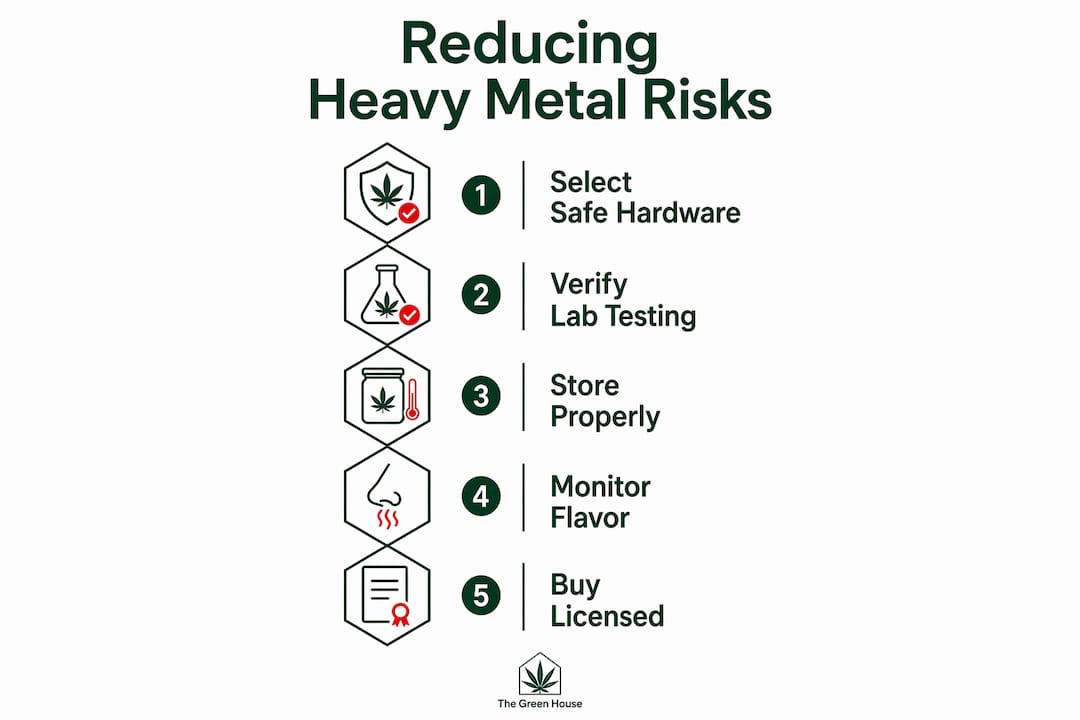
Follow these daily habits to stay on the safe side:
- Store at room temperature. Heat degrades oil and accelerates metal leaching from hardware. Keep cartridges away from windowsills, car dashboards, and direct sunlight.
- Inspect before every session. Look for oil discoloration, visible residue around the mouthpiece, or any change in vapor taste. These are early signs of hardware failure.
- Use the right battery voltage. Running a cartridge at too high a voltage overheats the coil. Overheating increases metal leaching and produces harsher vapor. Stay within the manufacturer’s recommended range.
- Take moderate draws. Long, hard pulls heat the coil more intensely. Shorter, gentler draws reduce peak coil temperature and lower your exposure risk per session.
- Replace cartridges on schedule. Do not push a cartridge past its intended lifespan. Old hardware leaches more metals than new hardware, even if the oil is not fully used up.
- Verify product authenticity regularly. Check that the COA on the brand’s website matches your current batch. Brands update their lab results with each new production run.
Pro Tip: If you notice a sudden change in flavor or vapor density mid-cartridge, that is not a terpene shift. It is a hardware signal. Stop using it and check the COA for your batch.
Proper storage and battery care are the two most overlooked factors in long-term vape safety. Most people focus entirely on the product and forget that how they use it matters just as much. For a deeper look at keeping your device clean and contaminant-free, this guide on low-additive vape selection covers storage and handling in detail.
What are the testing standards for heavy metals in cannabis vapes?
Regulatory action levels for inhaled cannabis products set strict upper limits on the four primary metals. These thresholds exist because the lungs absorb contaminants far more efficiently than the digestive system. Inhalation limits are significantly stricter than oral limits for this exact reason. Mercury, for example, carries a threshold as low as 0.1 μg/g for inhaled products.
The table below shows the four metals and their general regulatory context for inhaled cannabis:
| Metal | Primary source in vapes | Why it matters |
|---|---|---|
| Lead (Pb) | Soil, solder, hardware | Neurotoxin; no safe exposure level |
| Arsenic (As) | Soil, fertilizers, water | Carcinogen; damages lung tissue |
| Cadmium (Cd) | Fertilizers, plant uptake | Accumulates in kidneys; long-term risk |
| Mercury (Hg) | Environmental, hardware | Threshold as low as 0.1 μg/g for inhalation |
ISO/IEC 17025 accreditation is the benchmark for lab competence. It requires labs to validate their testing methods, maintain calibration records, and demonstrate proficiency. A lab that shows results without this credential cannot guarantee the accuracy of those results.
Batch-by-batch testing is the regulatory standard for cannabis vapes, not annual audits. This matters because lot failures are typically traced to input changes like a new fertilizer supplier or a different water source. A product that passed testing six months ago may not pass today if the grower changed inputs. Always check that the COA date matches the current production run.
Heavy metals cannot be remediated out of finished extract the way pesticides sometimes can. Once they are in the oil, they stay. This makes upstream prevention, starting with clean soil and quality hardware, the only reliable strategy.
Key Takeaways
Avoiding heavy metals in cannabis vapes requires verifying lab accreditation, matching batch numbers on COAs, and choosing hardware with ceramic or glass heating elements.
| Point | Details |
|---|---|
| Buy from licensed dispensaries | Licensed products require batch-level ICP-MS testing, which removes most contamination risk. |
| Match COA batch numbers | Always verify the batch number on the COA matches the number on your product packaging. |
| Choose ceramic or glass hardware | Ceramic and glass heating elements leach significantly fewer metals than exposed metal coils. |
| Store and use devices correctly | Keep cartridges at room temperature and use the correct battery voltage to prevent metal leaching. |
| Check ISO/IEC 17025 lab accreditation | Only trust COAs from labs with this accreditation and an explicit heavy metals testing scope. |
Why hardware risk is the part most consumers miss
Honestly, most of the conversation around cannabis vape safety focuses on the oil. People check for pesticides, residual solvents, and cannabinoid potency. Heavy metals in the extract get some attention. But the hardware? That part gets skipped almost entirely.
In my experience, the cartridge itself is often the bigger risk. Cheap metal coils and solder joints sitting in direct contact with warm oil, session after session, are a slow and invisible contamination source. The oil can test clean at the lab and still pick up metals from a low-quality cartridge by the time it reaches your lungs. That is a gap in how most people think about vape safety.
The shift toward regulated markets has genuinely improved product quality. That is real progress. But regulation covers the oil, not always the hardware. A licensed brand can sell a compliant extract in a substandard cartridge and technically pass testing. This is why I always recommend checking hardware specs alongside the COA, not instead of it.
The batch number check is another thing most people skip. It takes ten seconds. You scan the QR code, pull up the COA, and compare the batch number on the label. If they do not match, that lab result means nothing for the product in your hand. Scammers recycle old passing results on new batches all the time. That one check catches it.
My practical recommendation: buy from a dispensary that vets its hardware suppliers, not just its extract labs. Ask the staff directly. If they cannot tell you what the cartridge is made of, that tells you something important.
— Ethan
Lab-tested vapes at The Greenhouse Dispensary
If you want the peace of mind that comes with verified lab testing and quality hardware, The Greenhouse Dispensary has you covered.

The Greenhouse Dispensary carries a curated selection of premium THCA vapes that meet strict safety standards, with COAs available for every product. Both Houston locations, EaDo on Polk Street and Spring Branch on Long Point Road, are open 24/7 so you can shop on your schedule. Every product on the shelf has been vetted for quality and authenticity. Free delivery is available on orders over $100. If vaping is not your thing right now, the team also carries lab-tested Wyld Gummies and other clean alternatives worth checking out.
FAQ
What heavy metals are found in cannabis vapes?
The four primary heavy metals in cannabis vapes are lead, arsenic, cadmium, and mercury. They enter products through contaminated soil, extraction processes, and low-quality hardware components like metal coils and solder.
How do I check if my vape has been tested for heavy metals?
Request the Certificate of Analysis for your specific product batch and confirm the batch number on the COA matches the number on your packaging. The testing lab should hold ISO/IEC 17025 accreditation with heavy metals in its testing scope.
Are ceramic vape cartridges safer than metal ones?
Yes. Ceramic heating elements and glass chambers leach significantly fewer metals into the oil compared to exposed metal coils or brass fittings, especially under repeated heat exposure.
Why are inhalation limits stricter than oral limits for heavy metals?
The lungs absorb contaminants directly into the bloodstream far more efficiently than the digestive system does. Inhalable limits are up to 10 times stricter than oral limits to account for this higher absorption rate.
Can heavy metals be removed from cannabis extract after testing?
No. Unlike some contaminants, heavy metals cannot be remediated out of finished cannabis oil. Prevention through clean source material and quality hardware is the only reliable approach.
Recommended
Before You Go…
Here are a few handpicked articles to inspire your next self-care moment.


