

Reducing Cannabis Consumption While Maintaining Effects
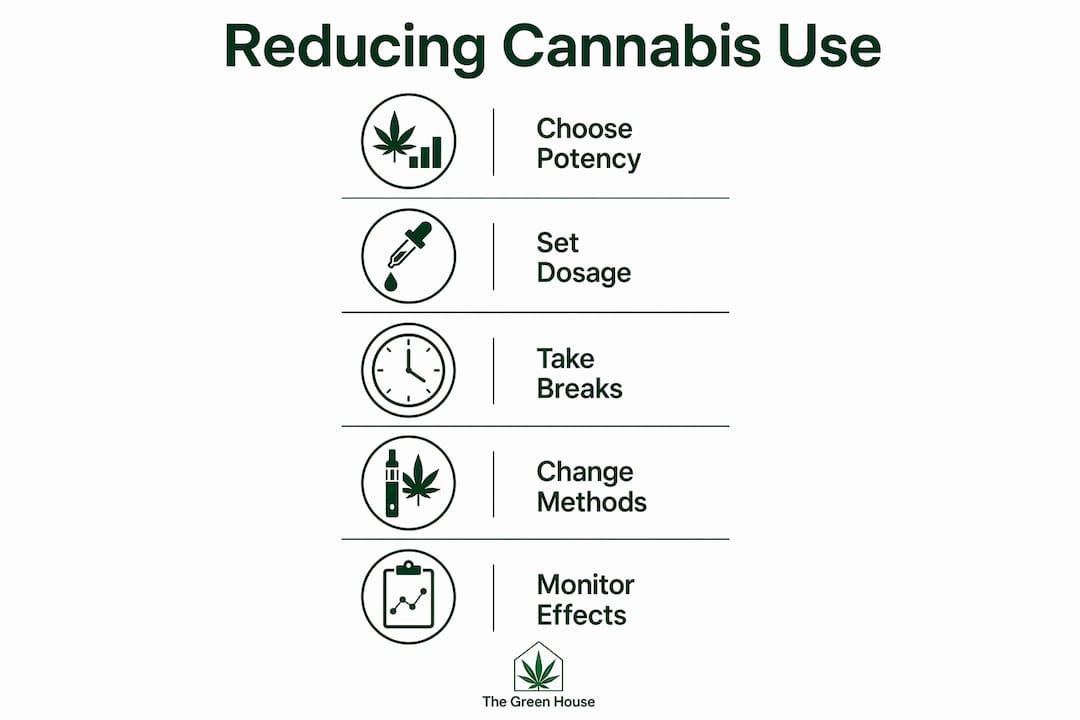
Reducing cannabis consumption while maintaining effects is achievable through three core levers: potency selection, dosing discipline, and usage pattern changes. You don’t have to quit to get more out of cannabis. The science of harm reduction and cannabinoid pharmacology shows that less THC, used more deliberately, often delivers better results than more THC used habitually. This guide covers the evidence-based strategies that actually work, from switching product types to taking planned tolerance breaks, so you can recalibrate your experience without losing the benefits you rely on. The Greenhouse Dispensary carries the product range to support every step of that process.
How does adjusting THC potency help with reducing cannabis consumption?
Potency is the single biggest lever most people overlook. Switching from high-potency concentrates (60–90% THC) to flower (15–25% THC) cuts your THC intake by roughly 75% per session. That’s a dramatic reduction without changing how often you consume.
The catch is compensation. Many people unconsciously smoke or vape more volume when they switch to lower-potency products, which cancels out the reduction entirely. Accepting that the first week or two will feel milder is the key to making the switch stick. After 1–2 weeks of tolerance adjustment, lower-potency cannabis is perceived as equally satisfying or even more enjoyable than high-potency use.
CBD ratios also matter here. Balanced 1:1 THC:CBD products moderate psychoactive effects, reduce anxiety, and lower dependence potential while preserving therapeutic benefits. If you’re currently using THC-dominant products, a 1:1 product is a practical middle step before going lower. You can read more about how these cannabinoids interact in this breakdown of THCA vs CBD differences.
Here’s a quick look at how product types stack up for consumption control:
- High-potency concentrates (60–90% THC): Highest risk of tolerance escalation and dependence; hardest to dose precisely.
- THCA flower (15–25% THC): Good middle ground; easier to pace and adjust session by session.
- Balanced THC:CBD (1:1 ratio): Reduces psychoactive intensity while keeping therapeutic effects intact.
- CBD-dominant or CBD-only products: Useful for addressing anxiety, sleep, or pain without adding to THC load.
Pro Tip: When you switch to a lower-potency product, set a hard limit on session volume before you start. Decide on two puffs or one gummy, and stop there regardless of how mild it feels initially.
What evidence-based dosing strategies sustain effects with less cannabis?
Dosing is where most people lose control without realizing it. Evidence-based THC dosing starts at 2.5 mg, increasing by 2.5 mg every 48 hours, with a maintenance ceiling of about 15 mg per day. Doses above 20–30 mg per day significantly increase adverse events without adding proportional benefit.
Cannabis exhibits a biphasic dose-response curve. That means low doses show anxiolytic and analgesic effects, while high doses produce the opposite: anxiety, cognitive impairment, and discomfort. More is not more. This is the pharmacological reason why “less is more” is not just a wellness slogan but a documented pattern in cannabinoid science.
Here’s a practical dosing protocol you can follow:
- Set your baseline. Start at 2.5 mg THC per session if using edibles or tinctures. For flower, one small inhalation and a 10-minute wait counts as your baseline.
- Wait before re-dosing. Edibles take 60–90 minutes to peak. Inhaled cannabis peaks in 10–20 minutes. Never stack doses before the first one has fully landed.
- Increase slowly. Add 2.5 mg every 48 hours only if your current dose isn’t meeting your needs. Resist the urge to jump.
- Track every session. Write down the product, dose, time, and effect. A consumption journal catches dosing creep before it becomes a habit.
- Respect the ceiling. Keep your daily total at or below 15 mg THC to stay in the therapeutic window and avoid tolerance escalation.
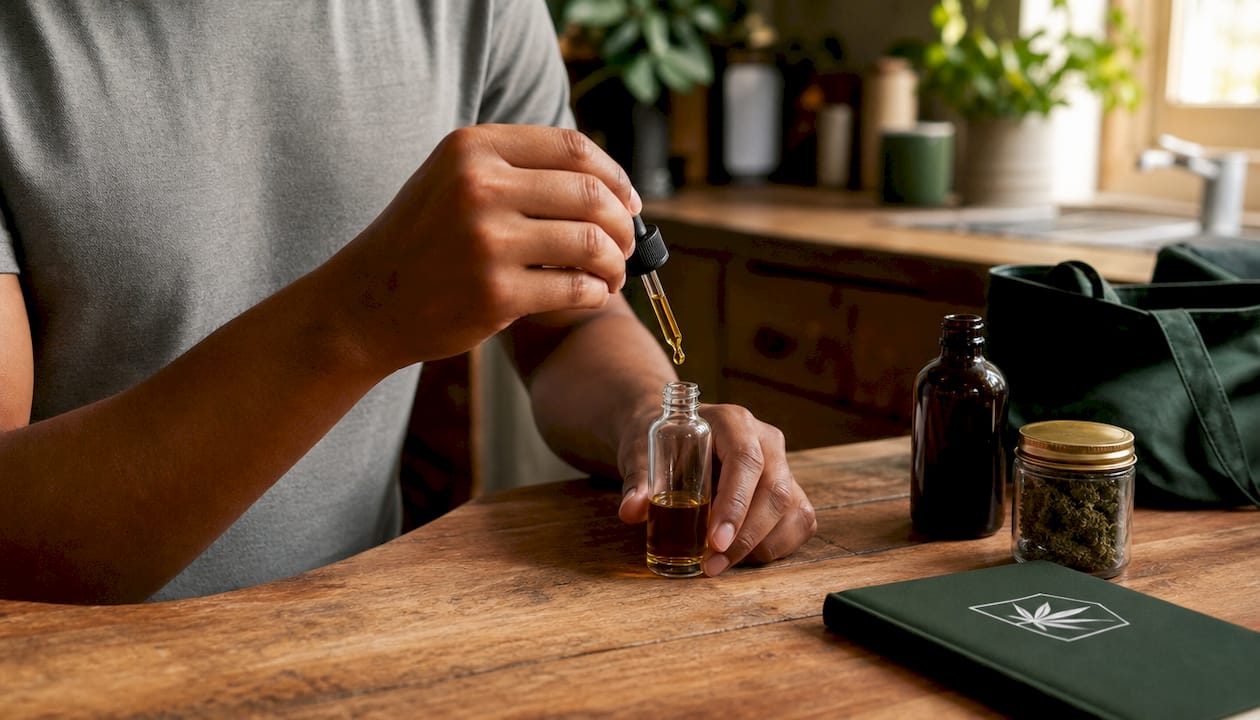
Pro Tip: Tinctures and edibles give you far more control than inhaled products. A calibrated dropper or a precisely dosed gummy removes the guesswork that leads to overuse. Check out this cannabis dosage guide for beginner-friendly starting points.
How can tolerance breaks and usage patterns support consumption reduction?
Tolerance breaks are the reset button your endocannabinoid system actually needs. Planned breaks range from 48 hours to 30 days: 48 hours initiates the withdrawal process, one week produces a noticeable tolerance reset, and 30 days nearly completes full neuroadaptation recovery. You don’t have to go 30 days to feel a difference.
Frequency matters as much as quantity. Limiting use to less than daily reduces dependence risk and respiratory issues significantly. Daily use is the strongest single risk factor for cannabis use disorder. Non-daily use, even at the same per-session dose, produces meaningfully lower dependence rates.
Here’s how to build a usage schedule that supports lower consumption:
- Schedule cannabis-free days. Start with two non-use days per week. Tuesday and Thursday work well because they break up the week without feeling like deprivation.
- Shift to evening-only use. Reserving cannabis for the evening prevents daytime habit formation and naturally limits total daily sessions.
- ⏱️ Use a timer between sessions. A minimum 4-hour gap between sessions prevents stacking and gives you time to assess whether you actually need more.
- Plan a structured break every 4–6 weeks. Even a 48-hour break every month keeps tolerance from creeping upward.
| Break duration | Primary effect | Best for |
|---|---|---|
| 48 hours | Initiates withdrawal, mild reset | Frequent users starting out |
| 1 week | Noticeable sensitivity improvement | Regular users seeking quick recalibration |
| 30 days | Near-complete neuroadaptation reset | Heavy users or those with high tolerance |
Pro Tip: Use your cannabis-free days to notice what you’re actually feeling without it. That awareness is the most useful data you’ll collect. Many people find that reducing cannabis rituals reduces the psychological hold of the habit faster than they expected.
What alternative methods help lower cannabis use while preserving benefits?
Switching your consumption method is one of the most underused strategies for minimizing cannabis intake. Vaporizing flower is less harmful than smoking, and tinctures and edibles allow far better dose control than any inhaled method. When you can’t see or feel the dose in real time, you’re much less likely to overshoot it. You can also explore ways to consume cannabis without smoking for a broader look at your options.
Addressing the underlying reasons you use cannabis is equally important. Improving sleep hygiene, treating anxiety with CBT, and managing pain through integrative approaches all reduce the motivation to use cannabis as a coping tool. If cannabis is filling a gap, filling that gap another way makes reduction far easier.
Here are practical steps to reduce reliance without losing the benefits you value:
- Try CBD-dominant products for daytime use. They address anxiety and inflammation without adding to your THC load. Microdosing CBD is a well-documented approach for maintaining focus and calm without psychoactive effects.
- Switch from smoking to vaporizing or oral formats. The dose control alone reduces overconsumption for most people within the first week.
- Identify your triggers. Write down what prompts each session. Boredom, stress, and sleep issues are the three most common drivers. Each has a non-cannabis solution worth trying.
- Use cannabis intentionally for sleep. Evening-only use for sleep is one of the most sustainable patterns for people who want to wind down at night without building a daytime habit.
Pro Tip: Diversifying your product collection, rather than relying on one format, gives you more control over when and how much you consume. A varied product approach makes it easier to match the right product to the right moment instead of defaulting to habit.
Key Takeaways
Reducing cannabis consumption while maintaining effects requires lower potency products, precise dosing starting at 2.5 mg THC, planned tolerance breaks, and addressing the underlying triggers that drive habitual use.
| Point | Details |
|---|---|
| Lower potency first | Switch from concentrates to flower or 1:1 products to cut THC intake without quitting. |
| Start at 2.5 mg THC | Evidence-based dosing starts low and increases by 2.5 mg every 48 hours, capping at 15 mg daily. |
| Plan tolerance breaks | Even 48 hours resets sensitivity; 30 days nearly completes full neuroadaptation recovery. |
| Track every session | A consumption journal catches dosing creep before it becomes a tolerance problem. |
| Address root triggers | Treating sleep, anxiety, or pain through other methods reduces the core motivation to overconsume. |
What I’ve learned from watching people actually cut back
The most common mistake I see is treating reduction like a willpower problem. It isn’t. It’s a design problem. People who succeed at lowering their cannabis use without losing the benefits they care about almost always do one thing differently: they change the product before they try to change the behavior.
Switching from a concentrate to a balanced flower or a 1:1 gummy removes the pharmacological pressure that makes cutting back feel impossible. The biology works in your favor once you stop flooding your receptors with 80% THC. Tolerance drops, sensitivity returns, and the same relief shows up at a fraction of the dose.
That said, I want to be honest about something most guides skip. Constant moderation, tracking every session and dose, carries a real mental load. For some people, that monitoring is more exhausting than simply stopping. If you find that tracking feels like a second job, that’s useful information. Moderation works best when it becomes automatic, not when it requires daily effort.
Treat every lapse as data, not failure. If you went back to a concentrate after two weeks on flower, ask why. Stress? Social pressure? Boredom? The answer tells you what to address next. Clear goals and a simple journal do more for long-term reduction than any product switch alone.
— Ethan
Precise dosing made easy at The Greenhouse Dispensary
If you’re ready to put these strategies into practice, The Greenhouse Dispensary makes it straightforward.
The Greenhouse Dispensary carries a curated range of products built for mindful consumption, including precisely dosed THCA seltzers that take the guesswork out of your session. Their THCA edibles collection includes low-dose formats that align directly with the 2.5–10 mg dosing protocols covered here. Every product is lab-tested, clearly labeled, and available 24/7 at both Houston locations. Free delivery applies to orders over $100. Whether you’re stepping down from concentrates or just getting more intentional about your intake, The Greenhouse Dispensary has the right product for where you are right now.
FAQ
What is the safest starting dose for reducing cannabis intake?
Evidence-based protocols recommend starting at 2.5 mg THC per session and increasing by 2.5 mg every 48 hours. Keeping your daily total at or below 15 mg significantly reduces adverse effects and tolerance escalation.
How long does a tolerance break need to be to reset sensitivity?
A 48-hour break initiates the reset process, while one week produces a noticeable improvement in sensitivity. A 30-day break nearly completes full neuroadaptation recovery for heavy users.
Does switching to lower-potency cannabis reduce the quality of effects?
No. After 1–2 weeks of tolerance adjustment, lower-potency cannabis is typically perceived as equally satisfying or more enjoyable than high-potency use. The experience becomes more nuanced once your receptors recalibrate.
What is the best consumption method for precise dosing?
Tinctures and edibles offer the most precise dose control. Vaporizing flower is a safer alternative to smoking and allows better session-by-session pacing than concentrates.
How does CBD help with minimizing cannabis intake?
Balanced 1:1 THC:CBD products moderate psychoactive intensity, reduce anxiety, and lower dependence potential while preserving therapeutic benefits. CBD-dominant products can also address daytime symptoms without adding to your THC load.
Recommended
Before You Go…
Here are a few handpicked articles to inspire your next self-care moment.


