

The Role of Natural Cannabis Extraction Explained
Natural cannabis extraction is the process of isolating cannabinoids and terpenes from the cannabis plant without chemical solvents, preserving purity and natural flavor. The industry term for this approach is solventless extraction, and its role in producing clean, potent concentrates has made it the preferred method for health-conscious consumers and premium producers alike. Methods like rosin pressing, ice water extraction (bubble hash), and dry sifting use only heat, pressure, water, and mechanical agitation to separate the plant’s most valuable compounds. The role of natural cannabis extraction goes far beyond simple processing. It defines the safety, flavor, and therapeutic quality of the final product.
What are the main natural cannabis extraction methods?
Solventless extraction relies on three core techniques, each producing a distinct product with its own quality profile. Understanding how each method works helps you choose the right product for your needs.
1. Dry sifting Dry sifting passes dried cannabis over fine mesh screens or sieves to collect the resin glands, called trichomes. The collected powder is commonly known as kief. It is the simplest method and requires minimal equipment, making it accessible for small-scale producers and home enthusiasts.
2. Ice water extraction (bubble hash) Ice water extraction agitates cannabis in ice-cold water, causing trichomes to break off and sink. The mixture passes through a series of mesh bags with progressively finer micron ratings, separating trichomes by size and quality. The result is bubble hash, rated on a scale from one to six stars based on purity and melt quality.
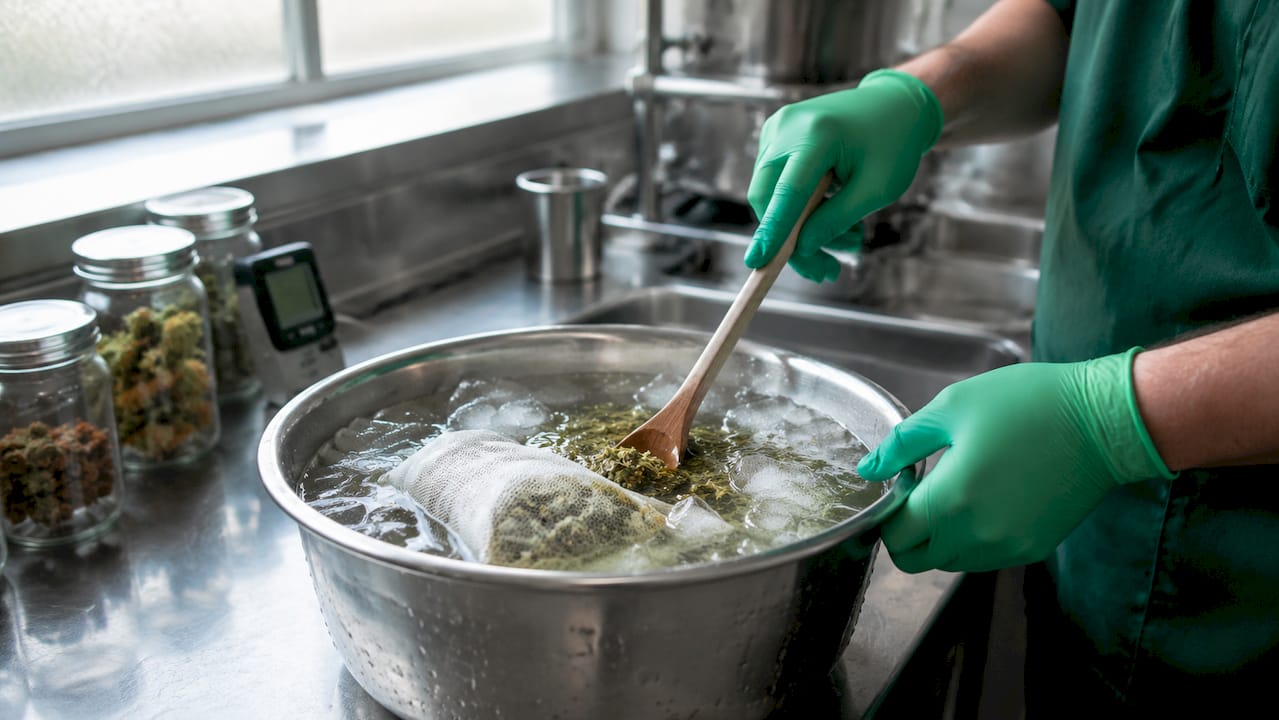
3. Rosin pressing and live rosin Rosin pressing applies heat and pressure to cannabis flower or hash to squeeze out a solvent-free oil. Flower rosin yields 10–25%, while hash rosin yields a much higher 50–70%. Live rosin takes the process further. It involves freezing plant material immediately after harvest and freeze-drying the resulting hash before pressing, which maximizes terpene preservation at every stage.
Temperature management is critical across all three methods. Pressing rosin above 220°F degrades terpenes quickly. Keeping ice water below 40°F during agitation protects delicate aromatic compounds. These small details separate average product from premium concentrate.
Pro Tip: For the best flavor from rosin, press at lower temperatures (160–180°F) for longer durations rather than high heat for short bursts. Lower heat preserves the terpene profile that gives each strain its unique character.
Solventless vs. solvent-based extraction: how do they compare?
Not all extraction methods are equal, and the differences matter for both producers and consumers. Solventless methods eliminate residual solvent concerns entirely, while solvent-based methods like CO2, ethanol, and hydrocarbon extraction offer higher throughput at scale.
Here is a direct comparison of the key factors:
| Factor | Solventless (rosin, ice water) | Solvent-based (CO2, ethanol) |
|---|---|---|
| Purity | No residual solvents | Residual solvent testing required |
| Yield | 10–70% depending on method | 20–30% for CO2; higher for ethanol |
| Terpene preservation | Excellent | Good to moderate |
| Equipment cost | Near $0 to moderate | $50,000–$500,000+ |
| Regulatory complexity | Lower | Higher (solvent handling, testing) |
| Consumer preference | Premium, purity-focused | Broad market, scalable |
Solvent-based methods do have real advantages. Supercritical CO2 extraction operates above 31.1°C and 73.8 bar, combining gas and liquid properties to extract cannabinoids efficiently at commercial scale. Ethanol extraction can enrich THC content dramatically through post-processing steps like winterization and charcoal treatment. Scientific processing can push THC content from 16.5% to 58.9% in finished extracts.
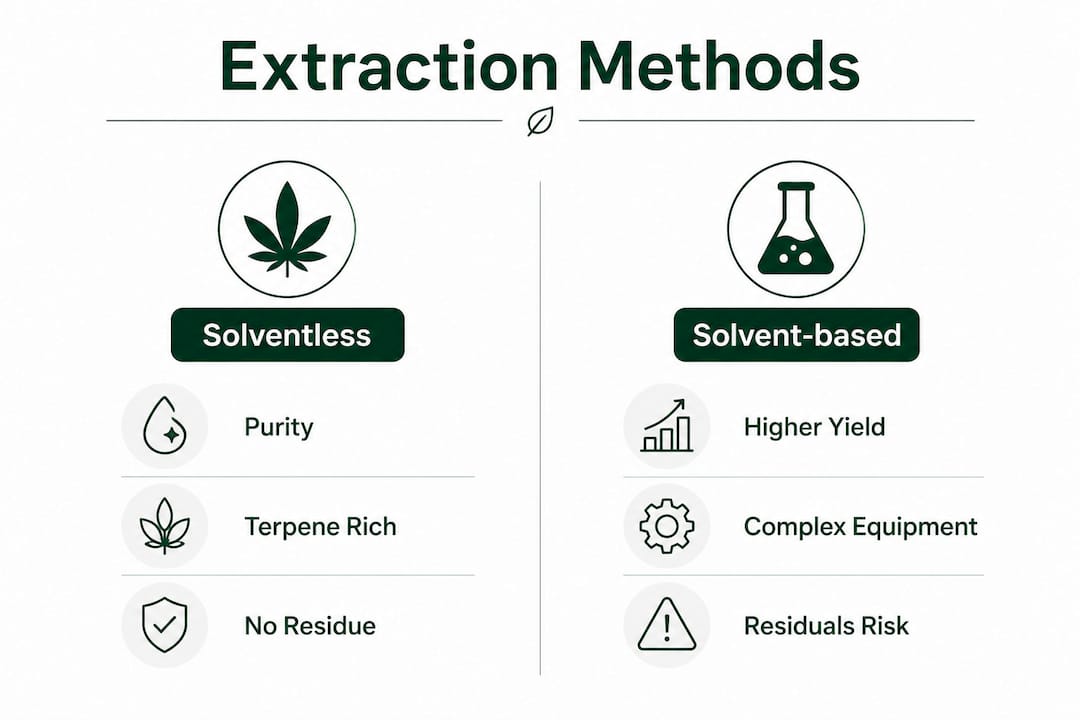
The trade-off is clear. Solvent-based methods scale well but require expensive equipment, strict safety protocols, and residual solvent testing. Solventless methods cost far less to start, produce cleaner products, and face simpler regulatory requirements. For premium market positioning, solventless wins on purity and flavor every time.
Key differences worth noting for buyers:
- Solventless concentrates like live rosin carry premium pricing because of higher labor and lower yields
- Solventless extracts produce cleaner, terpene-rich concentrates but require more skilled labor per gram
- Demand for solventless products is rising as consumers prioritize clean ingredients and simplified lab testing
What are the benefits of natural cannabis extraction for users?
The benefits of cannabis extraction using solventless methods go directly to the consumer experience. No solvents means no chemical residue in the final product. That matters whether you are a medical patient managing a health condition or a recreational user who simply wants the cleanest possible experience.
Here are the core benefits:
- Full-spectrum preservation. Solventless methods keep cannabinoids and terpenes intact, supporting the entourage effect. Full-spectrum extracts combining cannabinoids and terpenes create a nuanced therapeutic impact highly valued in medical cannabis markets.
- No residual solvents. Products like live rosin and bubble hash carry zero risk of chemical contamination. This is a major advantage for health-conscious consumers and medical patients.
- Superior flavor and aroma. Terpene preservation is the defining quality of solventless concentrates. Products like live rosin taste closer to fresh cannabis than any solvent-extracted oil.
- Regulatory simplicity. Producers avoid the residual solvent testing requirements that apply to CO2 and hydrocarbon extracts, reducing compliance costs and time to market.
- Broad product applications. Natural extracts appear in THCA vapes, dabs and concentrates, edibles, and topicals, giving consumers multiple ways to enjoy the same quality extraction.
Pro Tip: If you are new to concentrates, start with a bubble hash or hash rosin product. They deliver a full, clean flavor profile without the intensity of high-potency distillates, making them a great entry point for exploring natural extracts.
The importance of cannabis extraction using solventless techniques is especially clear for medical users. Patients who need consistent, predictable cannabinoid profiles benefit from the stability and purity that rosin and ice water hash deliver. No solvents also means fewer variables that could interfere with therapeutic outcomes.
What operational factors determine extraction quality?
The extraction method you choose is only part of the equation. Operational excellence contributes more to product quality than method selection alone. A skilled operator using a basic rosin press will consistently outperform an untrained operator using expensive CO2 equipment.
The critical operational factors include:
- Equipment cleanliness. Residue from previous runs contaminates flavor and potency. Screens, bags, and pressing plates need thorough cleaning between batches.
- Temperature and timing control. Even small temperature deviations during rosin pressing or ice water agitation degrade terpenes. Consistent monitoring is non-negotiable.
- Pre-processing discipline. Live rosin requires freezing plant material immediately after harvest. Any delay causes terpene loss before extraction even begins.
- Operator skill and training. Reading the material, adjusting pressure, and knowing when to stop pressing are skills built through experience, not just equipment specs.
- Quality assurance and testing. Lab testing for cannabinoid content and microbial safety is the final checkpoint. It confirms the extraction worked and the product is safe.
Lower yields are the honest trade-off of solventless methods. Hash rosin requires pre-filtering and quality hash input to reach commercial yields. That labor intensity is why solventless concentrates carry premium pricing in the market. The cost reflects real production effort, not just branding.
Key Takeaways
Natural cannabis extraction using solventless methods delivers the cleanest, most terpene-rich concentrates available, with purity and flavor that solvent-based methods cannot match at the premium tier.
| Point | Details |
|---|---|
| Solventless methods lead on purity | Rosin pressing, ice water hash, and dry sifting produce zero residual solvent risk. |
| Yields vary significantly by method | Flower rosin yields 10–25%; hash rosin reaches 50–70% with proper pre-filtering. |
| Operational skill drives quality | Clean equipment, trained operators, and temperature control matter more than method alone. |
| Full-spectrum benefits are real | Preserving cannabinoids and terpenes together supports the entourage effect for therapeutic users. |
| Premium pricing reflects real costs | Higher labor and lower yields justify the price gap between solventless and solvent-based products. |
Why I think solventless extraction is the future of premium cannabis
Honestly, the conversation around extraction methods has shifted dramatically over the past few years. When I first started paying close attention to cannabis concentrates, CO2 and hydrocarbon extracts dominated the premium shelf. That has changed. Consumers are reading labels now. They are asking about residual solvents, terpene content, and how their product was made. That curiosity is driving real market change.
What surprises most people is how much operational skill matters. The misconception that extraction method alone determines quality is one of the most persistent in this industry. I have seen mediocre live rosin from producers with expensive equipment and exceptional bubble hash from small operations running basic setups. The difference is always the people and the process.
The regulatory angle is also underappreciated. Solventless producers skip an entire category of compliance testing. That simplification is not trivial. It reduces costs, speeds up production cycles, and makes it easier to bring clean products to market quickly.
My prediction for 2026 and beyond: solventless extraction becomes the standard for premium cannabis, not the exception. Technology improvements in rosin press engineering and freeze-drying equipment are already closing the yield gap with solvent-based methods. When that gap narrows further, the purity advantage of solventless will make it the obvious choice for any producer targeting health-conscious consumers.
— Ethan
Explore natural cannabis products at Tghhouston
At Tghhouston, we stock products made from the best natural extraction processes available. Whether you are looking for terpene-rich concentrates, lab-tested THCA flower, or clean vape options, our shelves reflect our commitment to quality you can actually taste and trust.

Stop by our EaDo dispensary on Polk Street anytime, 24 hours a day, 7 days a week. Our team knows extraction methods inside and out and can point you toward the right product for your experience level and goals. We rotate our inventory daily so you always get the freshest options available. Free delivery on orders over $100 makes it even easier to explore what clean cannabis extraction really delivers.
FAQ
What is natural cannabis extraction?
Natural cannabis extraction, also called solventless extraction, isolates cannabinoids and terpenes using only heat, pressure, water, or mechanical agitation. No chemical solvents are involved at any stage of the process.
How does rosin pressing work?
Rosin pressing applies controlled heat and pressure to cannabis flower or hash, squeezing out a solvent-free oil rich in cannabinoids and terpenes. Hash rosin yields 50–70%, significantly higher than flower rosin at 10–25%.
Are solventless extracts safer than solvent-based ones?
Solventless extracts carry no residual solvent risk because no chemicals are used in production. This makes them the preferred choice for medical patients and health-conscious consumers who want clean, lab-verified products.
What is the entourage effect and why does it matter?
The entourage effect describes how cannabinoids and terpenes work together to enhance therapeutic and recreational effects. Full-spectrum extracts that preserve both compounds deliver a more complete and nuanced experience than isolated cannabinoids alone.
Why do solventless concentrates cost more?
Solventless concentrates require more skilled labor, careful pre-processing, and produce lower yields per pound of source material than solvent-based methods. That production intensity is reflected directly in the retail price.
Recommended
Before You Go…
Here are a few handpicked articles to inspire your next self-care moment.


