

Weed Dabs Explained: Types, Techniques, and Effects
Weed dabs are potent cannabis concentrates vaporized on a heated surface for immediate, intense effects. Unlike traditional flower, dabs carry THC levels of 60%–90%, which is three to six times higher than the 15%–25% found in most cannabis flower. That gap matters. A single small dab delivers more THC than several puffs from a joint. The industry term for this category is “cannabis concentrates,” and dabbing is the consumption method. If you’re curious about the different types of dabs, how to use a dab rig safely, or what to expect from your first session, this guide covers all of it.
1. What are weed dabs and how do they differ from wax?
“Wax” and “dabs” get used interchangeably, but they mean different things. Wax is the concentrate itself, while dabbing is the act of vaporizing it on a hot surface. Think of it this way: wax is the ingredient, dabbing is the cooking method.
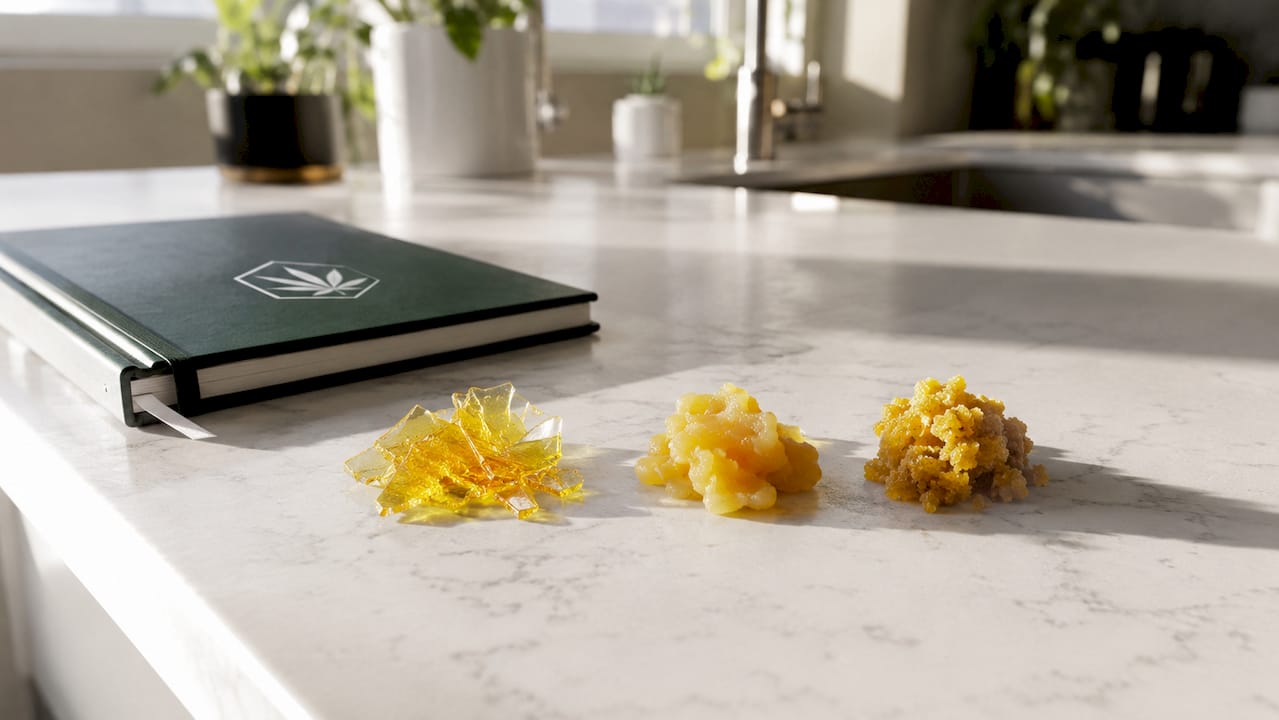
Wax is one specific texture of cannabis concentrate. Dabs is the broader category that includes shatter, budder, crumble, live resin, and live rosin. Knowing this distinction helps you shop smarter and communicate clearly with your budtender.
2. Different types of dabs: a full texture and extraction breakdown
The type of dab you choose affects flavor, potency, and ease of use. Extraction method and post-processing determine the final texture.
| Type | Texture | Extraction Method | Potency | Flavor |
|---|---|---|---|---|
| Shatter | Glass-like, brittle | Butane (BHO) | Very high | Mild |
| Wax | Soft, sticky | Butane (BHO) | Very high | Moderate |
| Budder | Creamy, whipped | BHO with agitation | High | Rich |
| Crumble | Dry, crumbly | BHO, low heat | High | Moderate |
| Live Resin | Saucy, viscous | BHO from fresh-frozen plant | Very high | Excellent |
| Live Rosin | Soft, oily | Solventless (ice water + heat) | High | Superior |
Here’s what sets each type apart in practice:
- Shatter is the easiest to portion because it snaps cleanly. It’s great for beginners who want predictable dosing.
- Wax dabs are soft and sticky, which makes them slightly harder to handle but very popular for their balance of potency and flavor.
- Budder has a whipped, butter-like consistency. It’s easy to scoop and produces smooth, flavorful vapor.
- Crumble is dry and crumbly, which makes it the easiest to load onto a dab tool without mess.
- Live resin is made from fresh-frozen cannabis, which preserves more terpenes than dried plant material. The result is a concentrate with noticeably better flavor.
- Live rosin uses no chemical solvents. It’s made with ice water and heat, making it the cleanest option for people who prioritize purity.
3. How to safely and effectively dab cannabis concentrates
Two main methods define how people dab: Hot Start and Cold Start. Each has real trade-offs.
Hot Start dabbing is the traditional approach. You heat the nail with a torch until it glows, let it cool for 30–60 seconds, then apply your concentrate. Optimal vaporization temperatures fall between 400°F and 600°F. Staying in that range preserves flavor and reduces throat irritation. Going above 600°F burns the concentrate instead of vaporizing it.
Cold Start dabbing (also called reverse dabbing) loads the concentrate into a cold nail before applying heat. Cold Start vaporizes concentrates more gently, preserving delicate terpenes and reducing harsh throat hits. Many experienced users prefer it for flavor-forward sessions.
Here’s a step-by-step Hot Start process for beginners:
- Fill your dab rig with water and check the airflow.
- Load a rice-grain-sized amount of concentrate onto your dab tool.
- Heat the quartz nail with a torch for 20–30 seconds.
- Let the nail cool for 30–60 seconds.
- Apply the concentrate to the nail while inhaling slowly.
- Place the carb cap over the nail immediately.
- Exhale and clean the nail with a dry cotton swab.
Pro Tip: Never skip the cooldown. Applying concentrate to an overheated nail burns it instantly, wastes product, and produces a harsh, unpleasant hit.
For safe dosing guidance, beginners should start with the smallest amount possible and wait a few minutes before taking more.
4. What are the effects and potency of dabs vs. traditional flower?
The potency gap between dabs and flower is significant. Dabs deliver nearly 100% of their THC into your system instantly, compared to the losses that occur during combustion smoking. That means the onset is faster and the effects are stronger.
Here’s what to expect:
- Onset: Effects hit within seconds, not minutes.
- Intensity: Much stronger than smoking the same amount of flower.
- Duration: Effects can last 1–3 hours depending on tolerance and dose.
- Throat feel: Higher temperatures cause more irritation. Cold Start and lower temps reduce this.
The THC concentration comparison is stark. Flower typically contains 15%–25% THC. Concentrates range from 60%–90%. That’s not a small step up. It’s a completely different category of experience.
Beginner doses of 5–30mg, roughly the size of a grain of rice, are the standard recommendation. That small amount contains far more active THC than a full bowl of flower. Overconsumption causes anxiety, dizziness, and discomfort, especially for new users. Start small. You can always take more.
5. Which dab devices work best for beginners and advanced users?
Your device choice shapes your entire experience. Traditional rigs with torches give you the most control and the best flavor, but they have a learning curve. Newer options make dabbing more accessible.
| Device | Complexity | Portability | Cost Range |
|---|---|---|---|
| Traditional rig + torch | High | Low | $$ |
| E-rig (electronic rig) | Medium | Medium | $$$ |
| Dab pen | Low | High | $ |
| Nectar collector | Low | High | $ |
Dab pens and nectar collectors are the best starting point for beginners. They avoid open flames, simplify temperature control, and are easy to carry. The trade-off is slightly less flavor precision compared to a full rig setup.
E-rigs sit in the middle. They use electric heating elements to hit precise temperatures without a torch. They’re great for users who want rig-quality results with less risk. Traditional rigs remain the gold standard for flavor and vapor quality, but they require practice and careful torch handling.
Pro Tip: If you’re new to dabbing, grab a dab pen first. Get comfortable with dosing and effects before moving to a torch setup. You’ll avoid burns and wasted concentrate while you learn.
For users who want discreet, low-odor options, dab pens are the clear winner. They produce minimal smell and fit in a pocket.
Cleaning matters regardless of device. Residue builds up fast and degrades flavor. Rinse water chambers after every few sessions and wipe the nail or atomizer after every use.
6. Tips to maximize flavor and protect your dab rig
Flavor is where dabbing beats every other consumption method, but only if you maintain your equipment. Here’s what actually works:
- Use a carb cap every time. A carb cap improves airflow and even vaporization, lowers the effective vaporization temperature, and pulls out more flavor from your concentrate. Without one, you’re leaving terpenes behind.
- Swab the nail after every dab. Use a dry cotton swab immediately after each hit while the nail is still warm. This removes residue before it burns on.
- Use isopropyl alcohol weekly. Cleaning with isopropyl alcohol removes stubborn buildup that dry swabs miss. Soak the nail for a few minutes, then rinse with warm water.
- Avoid chazzing. Chazzing is the burnt residue that forms when you overheat the nail repeatedly. It permanently stains quartz and kills flavor. Lower your temperature and clean consistently to prevent it.
- Store concentrates properly. Keep dabs in a cool, dark place in a sealed silicone or glass container. Heat and light degrade terpenes and potency fast.
Pro Tip: Buy a second quartz nail and rotate them. While one soaks in isopropyl alcohol, use the other. Your flavor stays consistent and neither nail gets overworked.
The carb cap is an essential accessory that creates a low-oxygen environment during vaporization. That environment maximizes terpene preservation and concentrate efficiency. If you’re not using one, you’re not getting the full experience your concentrate has to offer.
Key takeaways
Weed dabs deliver THC at 60%–90% concentration, making small doses, proper temperature control, and regular equipment cleaning the three non-negotiable habits for a good experience.
| Point | Details |
|---|---|
| Potency is dramatically higher | Dabs contain 3–6x more THC than flower; start with a grain-of-rice-sized dose. |
| Texture reflects extraction method | Live rosin is solventless and cleanest; shatter and wax use butane extraction. |
| Temperature control is critical | Keep nail temps between 400°F and 600°F for flavor and to avoid throat irritation. |
| Cold Start preserves terpenes | Loading concentrate before heating produces gentler vapor and better flavor. |
| Clean after every session | Swab the nail while warm and use isopropyl alcohol weekly to prevent chazzing. |
My honest take on learning to dab
When I started dabbing, I made every beginner mistake in the book. I overheated the nail, took doses way too large, and skipped the carb cap because I didn’t understand what it did. The result was harsh hits, wasted concentrate, and a stained quartz nail within two weeks.
The thing that changed everything was switching to Cold Start dabbing. The flavor difference is real. Live resin and live rosin especially shine at lower temps. You taste the terpenes instead of burning them off. If you’re chasing flavor, Cold Start is the technique to learn first.
My go-to concentrate is live rosin. The solventless extraction means I know exactly what’s in it. The flavor is cleaner and more complex than anything made with solvents. Yes, it costs more. The quality justifies it.
For anyone just starting out, I’d say this: use a dab pen for your first month. Get your dosing dialed in. Understand how concentrates affect you before you add a torch to the equation. Once you’re comfortable, move to a rig and explore different consumption methods to find what fits your lifestyle. Dabbing rewards patience and attention. Rush it, and you’ll have a bad time. Take it slow, and it becomes one of the most enjoyable ways to experience cannabis.
— Ethan
Premium dabs and concentrates at Tghhouston
Tghhouston carries a curated selection of lab-tested cannabis concentrates at both Houston locations, open 24/7 so you can shop when it works for you. Whether you’re after live resin for maximum flavor or a beginner-friendly wax, the menu rotates daily to keep things fresh and interesting.
Every product on the dabs and concentrate collection is lab-tested and meets strict quality standards, so you know exactly what you’re getting. Free delivery is available on orders over $100. If you want to pair your concentrate session with something smooth and easy, the Dozo Mega Smashers Gummies are a popular choice among Tghhouston regulars. Stop by EaDo on Polk Street or Spring Branch on Long Point Road, or browse online anytime.
FAQ
What are weed dabs made of?
Weed dabs are cannabis concentrates extracted from the cannabis plant using solvents like butane or solventless methods like ice water and heat. The result is a product with THC levels of 60%–90%.
How much should a beginner dab?
Beginners should start with 5–30mg, roughly the size of a grain of rice. That small amount contains significantly more THC than a full bowl of flower, so starting low prevents overconsumption.
What is the difference between dabs and wax?
Wax is one specific type of cannabis concentrate defined by its soft, sticky texture. Dabs is the broader term covering all concentrate types, including shatter, budder, crumble, live resin, and live rosin.
What temperature should I dab at?
The ideal temperature range for dabbing is 400°F to 600°F. Staying in this range preserves terpenes and reduces throat irritation. Let the nail cool for 30–60 seconds after heating before applying concentrate.
Are dab pens good for beginners?
Yes. Dab pens and nectar collectors are the safest and most intuitive starting point for new users. They eliminate open flames and simplify temperature control compared to traditional torch-and-rig setups.
Recommended
Before You Go…
Here are a few handpicked articles to inspire your next self-care moment.


