

Selecting Low Additive Cannabis Vapes: A Clean Guide
A low additive cannabis vape is defined as a product containing only pure cannabinoid oil and natural terpenes, with zero PG, VG, MCT oil, or vitamin E acetate. Selecting low additive cannabis vapes is the single most important step health-conscious consumers can take to protect their lungs from unnecessary chemical exposure. The 2019 EVALI outbreak made this painfully clear: vitamin E acetate, a common cutting agent, was directly linked to serious lung injuries across thousands of cases. Knowing what is in your vape oil, how it was extracted, and whether the hardware is safe gives you real control over your inhalation experience.
What ingredients should you look for in low additive vape options?
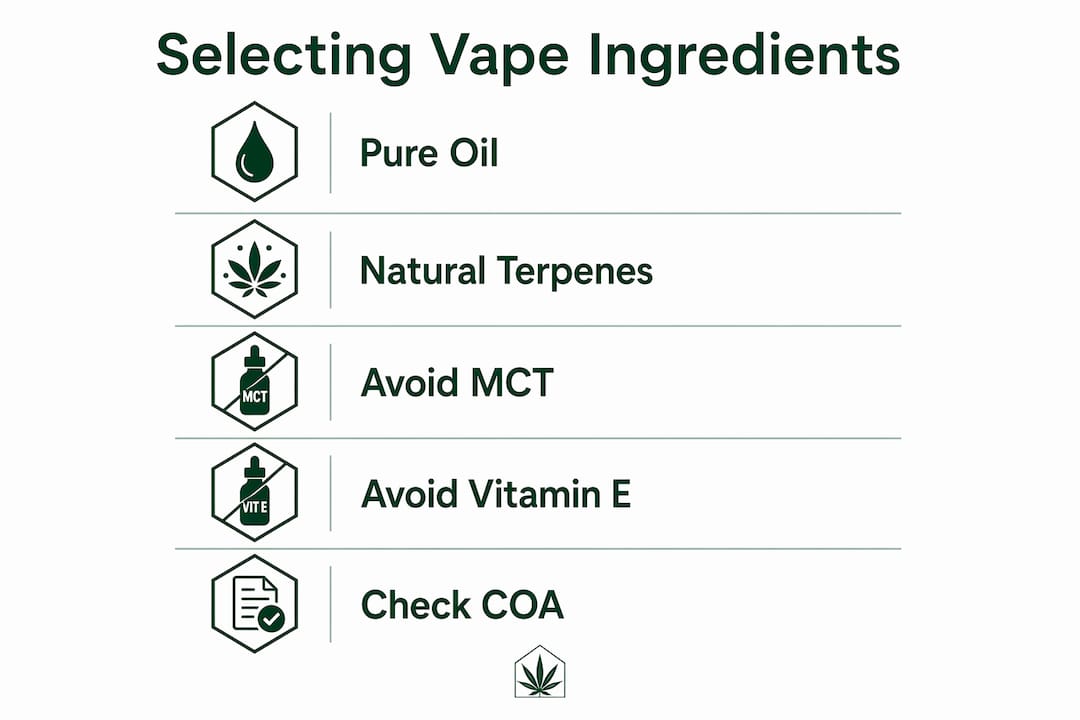
The gold standard for clean vape formulas is two ingredients: high-quality cannabinoid oil and natural terpenes. Top-rated brands verify this standard with full third-party lab testing. Anything beyond those two ingredients deserves a hard look before you buy.
Safe ingredients to look for
- Pure cannabinoid oil (THCA distillate, live resin, or full-spectrum extract)
- Cannabis-derived terpenes (pulled directly from the plant, preserving the natural flavor profile)
- Botanical food-grade terpenes (plant-sourced alternatives that are cleaner than synthetic options)
These ingredients serve a real purpose. Cannabis-derived terpenes thin the oil naturally while adding flavor and effect. Botanical terpenes can substitute thinning agents to achieve proper oil viscosity without introducing harmful chemicals.
Additives to avoid and why
- Vitamin E acetate — linked to EVALI, a serious lung injury condition; must be avoided entirely
- MCT oil — odorless and commonly used as a carrier, but linked to lipoid pneumonia when inhaled repeatedly
- Propylene glycol (PG) — a common thinning agent that produces irritating byproducts at vaping temperatures
- Vegetable glycerin (VG) — creates thick vapor but is not safe for repeated inhalation
- Synthetic flavorings — often undisclosed and untested for inhalation safety
The critical rule here: “food-safe” does not equal “safe to inhale.” Your digestive system handles MCT oil just fine. Your lungs do not. This distinction is the foundation of safe cannabis vaping.
Pro Tip: Watch for vague terms like “proprietary blend,” “all natural,” or “terpene blend” without specifics. Legitimate brands explicitly list what is NOT in their oil, such as “no PG, VG, MCT, or vitamin E acetate.” If a brand won’t tell you what’s in the vape, that’s your answer.
Marketing language like “pure” or “natural” carries no legal standard in the cannabis industry. Credible brands go further and name every ingredient on the label or their website. If you see a vague ingredient label, treat it as a red flag and move on.
How does extraction method affect vape purity?
Extraction is where oil quality is made or broken. The method a brand uses determines whether the final product needs thinning agents, retains its natural terpene profile, or carries solvent residues.
The cleanest extraction methods
- Live rosin (solventless): Uses only heat and pressure. No chemical solvents are involved, making it the gold standard for purity. It’s pricier, but flavor purists consider it worth every cent.
- CO2 extraction: Uses pressurized carbon dioxide to pull cannabinoids and terpenes. It leaves no solvent residues and preserves the terpene profile well.
- Ethanol extraction: Cleaner than hydrocarbon methods but requires careful post-processing to remove all solvent traces.
Extraction methods that may need additives
Hydrocarbon extracts (butane, propane) and basic distillation processes strip terpenes and produce thick oils. Brands using these methods often add thinning agents to make the oil vape-ready. That’s where PG, VG, and MCT oil sneak in. Cheaper brands frequently use undisclosed fillers like MCT oil to cut costs and thin out distillate.
Before you buy, ask these questions:
- What extraction method was used?
- Was the oil winterized or distilled after extraction?
- Were any thinning agents added post-extraction?
A brand that answers these questions openly is one worth trusting. The Greenhouse Dispensary carries products with full extraction method disclosure, so you’re never left guessing. Check out their natural extraction explainer for a deeper breakdown of why solventless methods matter.
How do you verify a cannabis vape Certificate of Analysis?
A Certificate of Analysis (COA) is a lab report that confirms what is and isn’t in your vape oil. Batch-specific COAs matched to the lot number on your packaging are the only reliable way to verify additive content. Packaging claims alone mean nothing without lab backup.
What a complete COA must show
A full-panel COA for an inhalable product covers more than just potency. Complete testing should include:
- Cannabinoid potency (THCA, THC, CBD, and minor cannabinoids)
- Residual solvents (confirms no butane, propane, or ethanol remains)
- Heavy metals (lead, mercury, arsenic, cadmium)
- Pesticides (full panel, not just a few common ones)
- Microbiological contaminants (mold, yeast, bacteria)
Each of these matters specifically because you’re inhaling the product. A COA that only shows potency is incomplete for a vape product.
Pro Tip: Scan the QR code on the packaging or visit the brand’s website to pull up the COA. Match the batch or lot number on the label to the number on the lab report. If they don’t match, the COA is not specific to your product. Learn more about reading these reports at The Greenhouse Dispensary’s COA guide.
Never rely on a COA that is more than 12 months old or one that doesn’t list the testing lab’s name and accreditation. Accredited labs follow ISO 17025 standards, which sets the bar for reliable cannabis testing.
Why does vape hardware quality matter for safe inhalation?
Oil purity gets most of the attention, but hardware quality is equally important. Ceramic coil hardware is the preferred standard for even heating and flavor preservation. Cheap wick-based coils burn unevenly and can introduce metallic residue into your vapor.
What to look for in quality hardware
- Ceramic heating element: Heats evenly, preserves terpenes, and doesn’t degrade at normal vaping temperatures
- Leak-proof construction: Prevents oil from pooling and burning on the coil
- Consistent draw resistance: Signals a well-built airflow system
- Rechargeable battery: Allows voltage control for a cleaner experience
Battery voltage and why it matters
Low-voltage settings in the 2.4–2.8V range protect terpene profiles and prevent oil from burning. Higher voltages degrade delicate terpenes and can produce harsh, potentially harmful byproducts. If your battery only has one fixed setting above 3V, it’s not ideal for high-quality, terpene-rich oils.
Pro Tip: Avoid disposable vapes with no voltage information listed. If the brand doesn’t disclose the battery specs, assume it runs hot. Reliable hardware includes leak-proof construction, ceramic cores, and a consistent draw every time.
Cheap hardware ruins even the cleanest oil. A $10 cartridge filled with premium live rosin will underperform a well-built ceramic device every single time. Invest in the hardware as seriously as you invest in the oil.
Step-by-step guide to choosing a high purity cannabis vape
Choosing the right vape doesn’t have to feel complicated. Follow these steps and you’ll cut through the marketing noise fast.
- Check the ingredient list first. If it lists anything beyond cannabinoid oil and terpenes, research every additive before buying.
- Identify the extraction method. Look for live rosin, CO2, or ethanol extraction. Avoid products that don’t disclose this.
- Pull the COA. Match the batch number, confirm full-panel testing, and check for residual solvents and heavy metals.
- Inspect the hardware specs. Look for ceramic coil construction and a battery that operates at 2.4–2.8V.
- Evaluate brand transparency. Does the brand publish its COAs publicly? Does it list what’s NOT in the product? Honest brands do both.
The most common mistake consumers make is trusting marketing buzzwords. “Lab tested,” “organic,” and “clean” mean nothing without documentation. Ask for the paperwork. A brand that hesitates to share it has something to hide.
Pro Tip: Browse The Greenhouse Dispensary’s curated vape collection to find products with full ingredient disclosure and accessible COAs. It saves you the research time.
Key Takeaways
Selecting low additive cannabis vapes requires verifying ingredients, extraction methods, batch-specific COAs, and hardware quality before every purchase.
| Point | Details |
|---|---|
| Two-ingredient standard | Clean vapes contain only cannabinoid oil and natural terpenes, nothing else. |
| Avoid food-safe additives | MCT oil and PG are safe to eat but cause lung harm when inhaled repeatedly. |
| Batch-specific COA required | Match the lot number on packaging to the lab report to confirm what’s actually in your vape. |
| Extraction method matters | Live rosin and CO2 extraction produce the cleanest oils with no thinning agents needed. |
| Hardware affects safety | Ceramic coil devices at 2.4–2.8V preserve terpenes and prevent harmful byproducts. |
What I’ve learned after years of watching people buy the wrong vape
The vape market is full of products that look clean and test dirty. I’ve seen beautifully packaged cartridges with “all natural” printed on the box that contained MCT oil and synthetic flavoring. The packaging was honest about nothing except the brand name.
The thing most consumers miss is the cumulative risk. One vape with MCT oil won’t destroy your lungs. But inhaling it daily for six months is a different story. The body doesn’t flush inhaled lipids the way it processes ingested ones. That’s the part the marketing never mentions.
My honest advice: demand full transparency before you spend a dollar. Ask the retailer for the COA. Ask what extraction method was used. If they can’t answer, walk away. The best brands make this information easy to find because they’re proud of it.
Additive-free vaping is safer than vaping with fillers. That’s a fact. But “safer” is not the same as “risk-free.” Inhalation always carries some level of exposure. The goal is to minimize every controllable variable, and ingredients, extraction, and hardware are all controllable.
One more thing: don’t let a low price convince you a product is fine. Cheap vapes are cheap for a reason. The cost savings almost always come from the oil quality, the hardware, or both. You’re inhaling this. It’s worth paying for quality.
— Ethan
Clean vapes, curated for you at The Greenhouse Dispensary

The Greenhouse Dispensary carries a curated selection of lab-tested vape products with full ingredient disclosure and accessible Certificates of Analysis. Every product in the vape lineup is chosen with health-conscious consumers in mind, so you’re not sorting through shelves of mystery oil. The Greenhouse Dispensary’s team can walk you through extraction methods, COA details, and hardware specs before you buy. If vaping isn’t your only preference, the store also carries clean alternatives like THCA seltzer single cans and premium gummies for a different kind of experience. Stop by either Houston location, open 24/7, or shop online with free delivery on orders over $100.
FAQ
What is a low additive cannabis vape?
A low additive cannabis vape contains only cannabinoid oil and natural terpenes, with no PG, VG, MCT oil, vitamin E acetate, or synthetic flavorings. The two-ingredient standard is verified by full third-party lab testing.
Why is vitamin E acetate dangerous in vapes?
Vitamin E acetate interferes with lung function and was the primary cause of the 2019 EVALI outbreak, which resulted in serious lung injuries. It must be avoided in any inhalable cannabis product.
How do I read a cannabis vape COA?
Match the batch or lot number on the packaging to the number on the lab report, then confirm the COA covers potency, residual solvents, heavy metals, pesticides, and microbiological contaminants. A COA that only shows potency is incomplete for a vape product.
What extraction method produces the cleanest vape oil?
Live rosin is the cleanest method because it uses only heat and pressure with no chemical solvents. CO2 extraction is a close second, preserving terpenes without leaving solvent residues.
Does hardware type affect vape safety?
Yes. Ceramic coil hardware heats evenly and reduces harmful byproducts compared to wick-based coils. Operating at 2.4–2.8V protects terpene profiles and prevents oil from burning at temperatures that create harsh or toxic vapor.
Recommended
Before You Go…
Here are a few handpicked articles to inspire your next self-care moment.


