

Testing New Cannabis Strain Drops: A 2026 Guide
Testing new cannabis strain drops is the process of sampling limited-release cultivars and products to discover unique effects and flavor profiles while managing potency safely. These drops are not your everyday shelf rotation. They are small-batch releases, sometimes limited to just 90 jars across a handful of retailers, designed to create real urgency. If you want to get the most out of trying new cannabis product drops in 2026, you need a plan before you ever open the package.
How to prepare for testing new cannabis strain drops
Preparation is the difference between a great experience and a frustrating one. Before you try any new drop, you need three things: a lab report, a clear sense of your own tolerance, and the right setting.
Read the certificate of analysis first
A certificate of analysis (COA) is the lab report that shows exactly what is in your product. It lists THC and THCA percentages, terpene content, and any contaminants. You can learn how to read one properly with this COA breakdown before your next purchase. Never skip this step with a new drop, because the numbers on the package alone do not tell the full story.

Know your terpene profile before you buy
Terpenes are the aromatic compounds that shape how a strain actually feels and tastes. A strain high in myrcene tends to feel relaxing and earthy. One loaded with limonene often feels uplifting and citrusy. Understanding terpene roles in cannabis helps you predict whether a new drop will suit your goals. The 2026 market is shifting toward terpene complexity over raw THC percentage, so this knowledge matters more than ever.
Here is a quick checklist to run through before any new drop:
- ✅ Pull the COA. Confirm THC/THCA levels and check for full terpene data.
- ✅ Set your intention. Are you testing for relaxation, creativity, or pain relief?
- ✅ Prepare your space. A calm, familiar environment reduces the chance of anxiety.
- ✅ Have water and a snack nearby. Simple, but genuinely helpful with high-potency products.
- ✅ Clear your schedule. Give yourself at least three hours with no obligations.
Pro Tip: If you are new to a particular product format, like concentrates or nanoemulsified edibles, start your research at the THCA vs CBD guide to understand what you are actually consuming before your first session.
Step-by-step guide to sampling flower, concentrates, and edibles
The biggest mistake consumers make with new drops is treating them like familiar products. High-potency new releases require a different approach depending on the format.
-
Start with a single, small dose. For flower testing, one small hit is enough to begin. High-THC strains in 2026 test between 24–33% THC and can deliver a delayed, intense “creeper” effect. That means you may not feel the full impact for 30–45 minutes.
-
Wait before you re-dose. Safe high-THC dosing follows a simple rule: start low, wait long. Take one small hit or a fraction of an edible, then wait at least 15–20 minutes before deciding whether to consume more. This single habit prevents most overconsumption incidents.
-
Understand your format’s onset time. Flower and vapes hit faster than edibles, but not all edibles are equal. Nanoemulsified rosin edibles onset in 15–20 minutes, which is dramatically faster than standard distillate gummies that can take 60–90 minutes. Knowing this prevents you from doubling your dose too soon.
-
Track your impressions in real time. Keep a simple notes app open or grab a notebook. Write down the strain name, format, dose, time of first consumption, and how you feel at 15, 30, and 60 minutes. This data becomes genuinely useful when you are comparing new cannabis strain reviews later.
-
Manage discomfort if it happens. If effects feel too strong, move to a calm space, drink water, and eat something. CBD can help counteract THC intensity if you have it available. Remind yourself the feeling is temporary and will pass.
Pro Tip: For concentrate drops like live resin or rosin, premium vape disposables offer a more controlled dose per puff than a dab rig, making them a better starting point when testing cannabis genetics you have never tried before.
How to evaluate new strain drops based on effects and flavor
Evaluating a new drop goes well beyond asking “did I get high?” The best cannabis strain testing tips focus on the full sensory and functional experience.
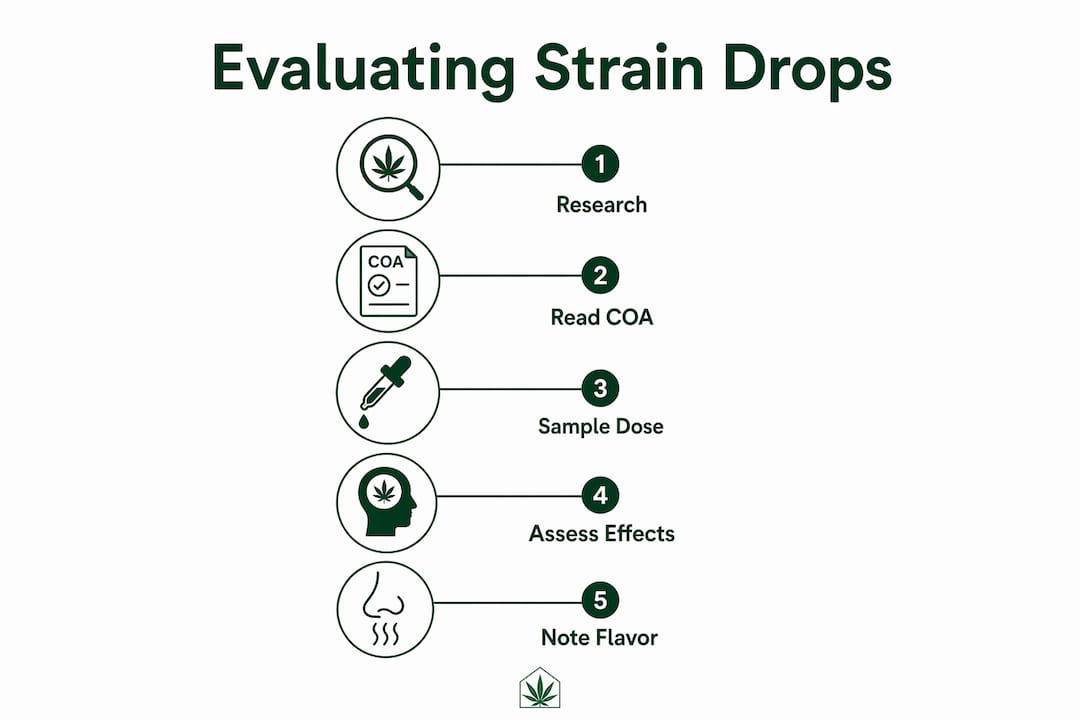
The 2026 market consensus is clear: terpene complexity beats raw THC as the primary quality indicator. A strain sitting at 26% THC with a rich, layered terpene profile will almost always outperform a 33% strain with a flat, one-note aroma. This is the single most important shift in how experienced consumers evaluate new drops.
Aroma is your first and most honest signal. Budtenders consistently advise that unique cultivars require firsthand sensory experience rather than relying on category labels. A strain described as “gassy” might smell like diesel to one person and roasted garlic to another. Open the jar, take a slow breath, and trust your nose before you trust the label.
Here is a practical evaluation framework:
- Aroma complexity: Does it have multiple layers, or is it flat and one-dimensional?
- Flavor on exhale: Does the taste match the aroma, or does it fall apart?
- ⏱️ Effect onset and arc: How quickly does it hit, and how does it build over 60 minutes?
- Functional outcome: Did it match your intention (relaxation, focus, creativity)?
- Repeatability: Would you buy it again, or was it a one-time curiosity?
| Evaluation Criteria | What to Look For |
|---|---|
| Terpene profile | Multiple named terpenes on the COA, not just total percentage |
| Aroma quality | Complex, layered scent that holds up after opening |
| Effect onset | Matches the format (fast for vapes, 15–20 min for nano edibles) |
| Balanced effects | Functional high without anxiety or sedation you did not want |
| Market availability | Limited drop or ongoing stock, affects restock planning |
Following dispensary social media and email lists is the most reliable way to track latest cannabis strain releases. Drops are deliberately limited to create urgency, and monitoring retailer channels one to two days ahead gives you the best chance of securing rare cultivars before they sell out.
Common mistakes when testing new cannabis strain drops
The most common error is ignoring onset time. Consumers try a new edible, feel nothing after 30 minutes, and take a second dose. Then both doses hit at once. This is especially risky with standard distillate gummies, which can take up to 90 minutes to fully activate.
Misreading strain labels is the second big mistake. “Hybrid” tells you almost nothing useful about a strain’s actual effects. A hybrid can lean heavily sativa or indica depending on its specific genetics and terpene makeup. Understanding cultivar differences helps you read between the lines of vague marketing labels.
The most valued drops are often the ones recommended by budtenders after the initial release hype fades. Community feedback and professional guidance consistently outperform social media buzz when it comes to identifying which new drops are genuinely worth your time and money. If a strain is still getting praise two weeks after its drop date, that is a much stronger signal than day-one excitement.
If effects feel overwhelming, the fix is simple: sit down, breathe slowly, drink cold water, and eat a light snack. Avoid loud environments or screens if possible. The experience will pass, and you will have useful data for your next session. Talk to your budtender afterward. They want to know what worked and what did not, and that conversation helps them guide you better next time.
Key takeaways
Testing new cannabis strain drops successfully requires preparation, patience, and a focus on terpene quality over raw THC numbers.
| Point | Details |
|---|---|
| Read the COA first | Always check lab reports for THC levels and terpene data before trying a new drop. |
| Start low, wait long | Take one small dose and wait 15–20 minutes before deciding to consume more. |
| Onset times vary by format | Nano edibles hit in 15–20 minutes; standard edibles can take up to 90 minutes. |
| Prioritize terpene complexity | A rich terpene profile predicts a better experience than a high THC percentage alone. |
| Track dispensary channels | Monitor social media and email lists 1–2 days before a drop to secure limited stock. |
What I’ve learned from chasing drops for years
By Ethan
Honestly, the most useful thing I ever did was stop chasing the highest THC number on the shelf. I spent a solid year convinced that potency was the whole game. It is not. The drops that stuck with me were the ones with unusual terpene combinations, the ones where the aroma alone told you something interesting was happening before you ever lit up.
The second thing I learned is that patience is not optional with new drops. High-potency products require you to slow down. I have seen experienced consumers get caught off guard by a creeper strain because they assumed their tolerance would protect them. It does not always work that way, especially with new genetics you have never encountered before. The THC tolerance guide from Floral Beverages is worth reading if you think your tolerance makes you immune to overconsumption surprises.
The third thing is community. The drops that earned lasting respect in my experience were the ones still being talked about weeks after release, not just on drop day. Talk to your budtender after you try something new. Write down your impressions. Share them. That feedback loop makes every future drop a better experience.
— Ethan
Fresh drops, ready when you are at Tghhouston
Tghhouston makes it easy to stay ahead of the latest cannabis strain releases without the stress of hunting them down.
At Tghhouston’s two Houston locations (EaDo on Polk Street and Spring Branch on Long Point Road), the product menu rotates daily to keep things fresh and exciting. The team carries lab-tested THCA products across every format, including THCA seltzer single cans for fast-absorbing, controlled experiences, and Pure P’s THCP gummies for consumers who want precise, potent dosing from premium edible drops. Both locations are open 24/7, and the knowledgeable staff can walk you through any new arrival. Free delivery is available on orders over $100, so you can explore new drops from home too.
FAQ
What does “testing new cannabis strain drops” mean?
Testing new cannabis strain drops means sampling limited-release cultivars or products to evaluate their effects, flavor profiles, and potency. These drops are typically small-batch releases with high scarcity, sometimes limited to fewer than 100 units across select retailers.
How long should I wait between doses when trying a new drop?
Wait at least 15–20 minutes after your first dose before consuming more. High-THC strains can take 30–45 minutes to reach peak effect, and standard edibles can take up to 90 minutes.
Why do terpenes matter more than THC percentage?
Terpenes shape the actual character of a strain’s effects and flavor. The 2026 market consensus favors full-spectrum, terpene-rich profiles over raw THC numbers because they produce more nuanced and satisfying experiences.
How do I find out about new cannabis strain drops before they sell out?
Follow your dispensary’s social media accounts and sign up for email alerts. Monitoring retailer channels one to two days before a scheduled drop gives you the best chance of securing limited stock.
What should I do if a new drop feels too strong?
Move to a calm space, drink water, and eat a light snack. CBD can help reduce THC intensity if available. The effects are temporary, and talking to a budtender afterward helps you make better choices on your next drop.
Recommended
Before You Go…
Here are a few handpicked articles to inspire your next self-care moment.


