

Cannabis Cultivar Differences: What You Need to Know
A cannabis cultivar is a cultivated plant group selected for specific traits that is genetically distinct, uniform, and stable under propagation. That definition comes directly from the International Code of Nomenclature for Cultivated Plants (ICNCP), and it matters more than most product labels suggest. If you’ve ever wondered what is cannabis cultivar difference and why it affects what you actually feel, you’re asking exactly the right question. The answer goes well beyond marketing names like “OG Kush” or “Blue Dream.” It sits in the plant’s chemistry, genetics, and breeding history.
What is the cannabis cultivar difference vs. strains and varieties?
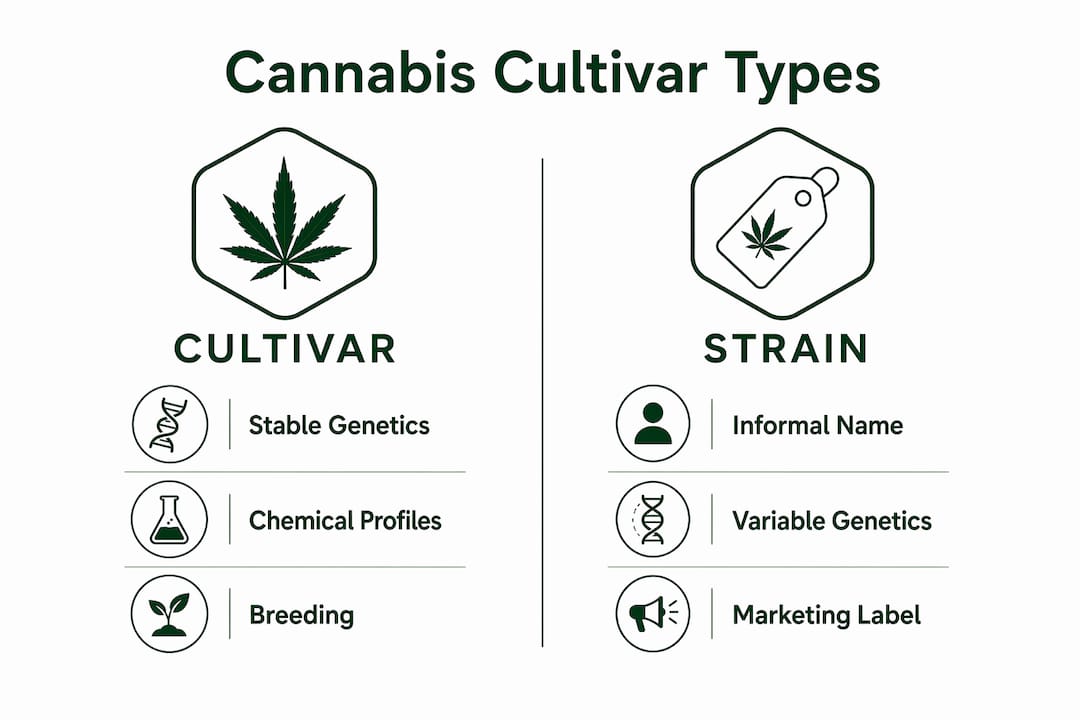
The word “strain” is everywhere in cannabis retail, but it’s an informal marketing term, not a scientific classification. A cultivar, by contrast, meets strict criteria: it must be distinct, uniform, and stable when propagated, following ICNCP Article 2.3 standards. That’s a high bar. Most commercial cannabis strains don’t clear it.

The problem is polyhybridization and seed-line segregation. Many commercial cannabis strains fail ICNCP cultivar compliance because growers cross so many genetic lines that offspring vary widely. Two bags labeled “Gelato” from different sources can have completely different cannabinoid profiles. That inconsistency is exactly what the cultivar classification system is designed to prevent.
A “variety” adds another layer of confusion. In botany, a variety occurs naturally in the wild without human selection. A cultivar is human-developed. Cannabis sativa has naturally occurring varieties shaped by geography and climate. Cultivars are the result of deliberate breeding programs aimed at locking in specific traits like high THCA content, a particular terpene profile, or a defined growth structure.
Here’s a quick breakdown of how these three terms compare:
| Term | Origin | Stability | Primary Use |
|---|---|---|---|
| Strain | Informal/marketing | Low | Consumer retail labels |
| Cultivar | Human-bred selection | High | Scientific and regulated markets |
| Variety | Natural occurrence | Moderate | Botanical classification |
Pro Tip: When you shop for cannabis, ask for a Certificate of Analysis (COA). A true cultivar will show consistent cannabinoid and terpene numbers across batches. A loosely named strain often won’t.
Understanding the difference between cannabis strains and cultivars isn’t just academic. It directly affects whether you get the same experience twice from the same product name.
What chemical and genetic differences define cannabis cultivars?
Cannabis cultivar differences go deeper than the plant’s name or appearance. The real distinctions live in two frameworks: chemotypes and chemovars.
The chemotype system classifies cannabis by cannabinoid ratios into five types. Type I is THC-dominant. Type II is a mixed THC/CBD ratio. Type III is CBD-dominant. Type IV is CBG-dominant. Type V contains virtually no cannabinoids. This framework, developed by Small and Beckstead in 1973 and refined by de Meijer in 2003, gives cultivars a chemical identity that a name alone never could.
The chemovar concept takes that further. A chemovar integrates both cannabinoid and terpene profiles into a single chemical fingerprint. Two cultivars might both be Type I THC-dominant, but one could be rich in myrcene while the other leads with limonene. Those terpene differences change the experience meaningfully. Terpenes modify perceived effects, so evaluating cultivar differences requires looking beyond THC percentage to the full terpene-cannabinoid profile.
Genetics back this up at the DNA level. A 2025 study developed a 20-SNP panel that successfully differentiated 32 cannabis cultivars using a minimal genotyping approach validated on both fresh and dried plant materials. That’s significant because it means cultivar identity can now be confirmed scientifically, not just claimed on a label.
Pro Tip: Look for products that list terpene percentages alongside cannabinoid content. A full cannabinoid and terpene profile tells you far more about what to expect than a THC number alone.
The takeaway here is clear. Chemistry and genetics define cultivar types in cannabis more reliably than any brand name or visual description ever will.
Do indica, sativa, and hybrid labels actually reflect cultivar differences?
Honestly, not really. And this is one of the biggest misconceptions in cannabis retail.
Indica and sativa terms describe plant morphology, not consistent consumer effects. Indica plants tend to be shorter and bushier. Sativa plants grow taller with narrower leaves. Those are structural traits, not chemical ones. Leafly confirms these labels describe structure, not reliable effect profiles, which depend on body chemistry and the plant’s actual chemical composition.
Here’s why that matters for cultivar comparisons:
- Most commercial cultivars are hybrids. Pure indica or sativa genetics are rare in today’s market.
- Two products labeled “sativa” can have opposite terpene profiles and produce very different experiences.
- A hybrid cultivar bred for a specific chemotype is far more predictable than any indica or sativa label.
- Consumer expectations built around these labels often lead to disappointment when the chemistry doesn’t match the marketing.
The indica/sativa framework made sense when cannabis was less hybridized. Today, it’s a shortcut that oversimplifies what are actually complex cultivar differences. Breeders who develop true cultivars focus on locking in specific chemical traits, not on whether the plant looks bushy or tall.
If you want to understand how cannabis cultivars vary in ways that actually predict your experience, skip the morphology labels. Go straight to the chemistry.
Why do cultivar differences matter for medicinal and recreational users?
Cultivar-based consistency is the foundation of reliable medicinal dosing. A 2025 Journal of Cannabis Research paper confirms that genotype and chemotype control is vital for therapeutic consistency, far beyond potency testing alone. That means a patient using cannabis for sleep, pain, or anxiety needs the same chemical fingerprint in every batch, not just a similar THC percentage.
For recreational users, the stakes are lower but the logic is the same. When you find a cultivar that works for you, you want to find it again. A true cultivar with stable genetics and a consistent chemovar profile gives you that repeatability. A loosely named strain from a different seed line might share the name but deliver a completely different experience.
Here’s how to use cultivar information when making purchasing decisions:
- Check the chemotype. Is it Type I (THC-dominant), Type II (mixed), or Type III (CBD-dominant)? Match it to your goal.
- Read the terpene panel. Myrcene, limonene, caryophyllene, and linalool each contribute differently to the overall effect.
- Ask about batch consistency. A reputable dispensary can show you COA data across multiple batches of the same cultivar.
- Look for genetic stability claims. Products from cultivars bred through controlled seed lines or clonal propagation are more consistent than open-pollinated varieties.
“For medicinal use, controlling cultivar identity genetically and chemically can improve batch consistency far beyond potency testing alone.” — Journal of Cannabis Research, 2025
One honest drawback worth knowing: cultivars reduce genetic diversity because they reproduce selected genotypes clonally or through controlled seed lines. That’s great for consistency but limits the natural variation that wild cannabis populations carry. For most consumers, that tradeoff is worth it. For ecological preservation, it’s a real concern.
Understanding how cannabis cultivars vary gives you real power as a consumer. You stop chasing names and start reading chemistry. That shift changes everything about how you shop. You can also learn more about cannabis extraction methods to see how cultivar chemistry carries through to finished products.
Key Takeaways
Cannabis cultivar differences are defined by genetic stability, chemical fingerprints, and deliberate breeding, making cultivar identity the most reliable guide for consistent medicinal and recreational use.
| Point | Details |
|---|---|
| Cultivar vs. strain | A cultivar meets strict ICNCP standards for stability; most retail strains do not. |
| Chemotype classification | Types I through V classify cultivars by cannabinoid ratios, giving each a chemical identity. |
| Terpenes matter | Full chemovar profiles predict effects more accurately than THC percentage alone. |
| Indica/sativa limits | These labels describe plant shape, not chemical effects or cultivar identity. |
| Medicinal consistency | Genotype and chemotype control across batches is essential for reliable therapeutic use. |
What I’ve learned from years of watching cultivar labels come and go
I’ve watched the cannabis industry cycle through naming trends for a long time. Every few years, a new strain name becomes the hottest thing on every menu. And almost every time, the same name from two different sources produces completely different results. That’s not a coincidence. It’s a direct consequence of the industry’s loose relationship with cultivar science.
The most useful shift I’ve seen is when consumers stop asking “what strain is this?” and start asking “what’s the terpene profile?” That question forces a real answer. A dispensary that can hand you a COA showing consistent myrcene and caryophyllene levels across three batches of the same cultivar is telling you something meaningful. One that just says “it’s a relaxing indica” is not.
The SNP genotyping research from 2025 genuinely excites me. The idea that you can confirm a cultivar’s identity from dried flower using a 20-marker DNA panel means the days of unverifiable strain names could be numbered. That’s a win for everyone, especially medicinal users who need to know exactly what they’re getting.
My honest advice: treat the cultivar name as a starting point, not a guarantee. Read the chemistry. Ask for batch data. And if a product can’t show you a COA, that tells you something too. The certificate of analysis is your best tool for cutting through marketing noise and finding what actually works for you.
— Ethan
Premium products with verified cannabinoid profiles at Tghhouston
At Tghhouston, we stock products where the chemistry is the point, not just the name on the label.

Our THCA Seltzer Single Cans deliver a consistent cannabinoid profile in every can, making them a great option if you want a predictable, measured experience. For edible fans, Wyld Gummies are known across the industry for standardized cannabinoid content and reliable batch quality. Both products reflect exactly what cultivar science is pushing the industry toward: less guesswork, more consistency. We also carry Half Bak’d Sumo Sour’d Gummies for those who want a higher-potency option with clearly labeled cannabinoid content. Shop online with free delivery on orders over $100, or visit us 24/7 at our EaDo or Spring Branch locations in Houston.
FAQ
What is a cannabis cultivar?
A cannabis cultivar is a cultivated plant group that is genetically distinct, uniform, and stable under propagation, following ICNCP standards. It differs from an informal strain because it meets strict scientific criteria for consistency across batches.
How does a cultivar differ from a cannabis strain?
A cultivar is a scientifically defined, stable plant group; a strain is an informal retail label with no required genetic consistency. Many commercial strains fail cultivar standards due to polyhybridization and seed-line variation.
What are the main cultivar types in cannabis?
Cannabis cultivars are classified chemically into five chemotypes based on cannabinoid ratios, from Type I (THC-dominant) to Type V (cannabinoid-free). Chemovar classification adds terpene profiles for a more complete chemical fingerprint.
Do indica and sativa labels describe cultivar differences?
No. Indica and sativa describe plant morphology, not chemical effects or cultivar identity. Most commercial cultivars are hybrids, making these labels poor predictors of the actual experience.
Why does cultivar consistency matter for medicinal users?
Genotype and chemotype control across batches is essential for therapeutic consistency, as confirmed by a 2025 Journal of Cannabis Research study. Potency testing alone is not sufficient for reliable medicinal dosing.
Recommended
Before You Go…
Here are a few handpicked articles to inspire your next self-care moment.


